
On this page
Dental treatment in Turkey can begin with a very personal aim: eating comfortably, replacing a missing tooth, understanding an old restoration or feeling more confident about your smile. Those aims deserve a plan that connects appearance with oral health. Cureista helps you start a conversation with collaborating dentists and organise the questions behind your decision. You can enquire about an individual concern without already knowing which treatment name belongs on the final plan.
Use this page to explore the main choices, the questions that shape cost and the arrangements involved in travelling for dental care. Detailed pages connect cosmetic dentistry in Istanbul with assessment, treatment planning and practical preparation. The descriptions here explain general concepts, not a diagnosis for your teeth. Your dentist needs to assess the mouth, discuss alternatives and explain what the proposed treatment would mean for you before an individual recommendation can be made.
Begin with the problem you want to solve
A treatment enquiry becomes clearer when you describe the problem rather than prescribe the solution. Perhaps a gap makes chewing uncomfortable, a tooth has changed colour, or you dislike the alignment visible when you smile. These concerns can have different explanations and may involve more than one treatment option. Start with what bothers you, what you would like to change and whether a dentist has already examined it. This gives the consultation a useful direction.
Consider function and appearance together. A photograph may show the colour or position of front teeth, but it does not establish the condition of every tooth, the gums or the supporting structures. If you have pain, swelling or an urgent concern, seek timely local dental care rather than waiting for a future trip. Planned treatment abroad should not become a reason to delay assessment of an active problem at home.
Write a short account of previous dental work and the documents you already have.
- You do not need to commission a new scan simply to start an enquiry; ask the treating dentist which information is necessary and whether existing records are useful.
- An organised starting point can reduce misunderstandings.
It also helps distinguish a request for general information from a clinical consultation, where the dentist can examine findings and explain the options that are actually relevant.
Keep smile design connected to oral health
Cosmetic dentistry in Turkey is a broad search term. It can refer to discussions about tooth colour, shape, proportion or alignment, but those concerns should be considered alongside the health and function of the mouth. Ask the dentist what is driving the recommendation and whether the proposed change requires alteration of healthy tooth structure. You should understand the purpose of each step, not simply be shown a single idealised image of a finished smile.
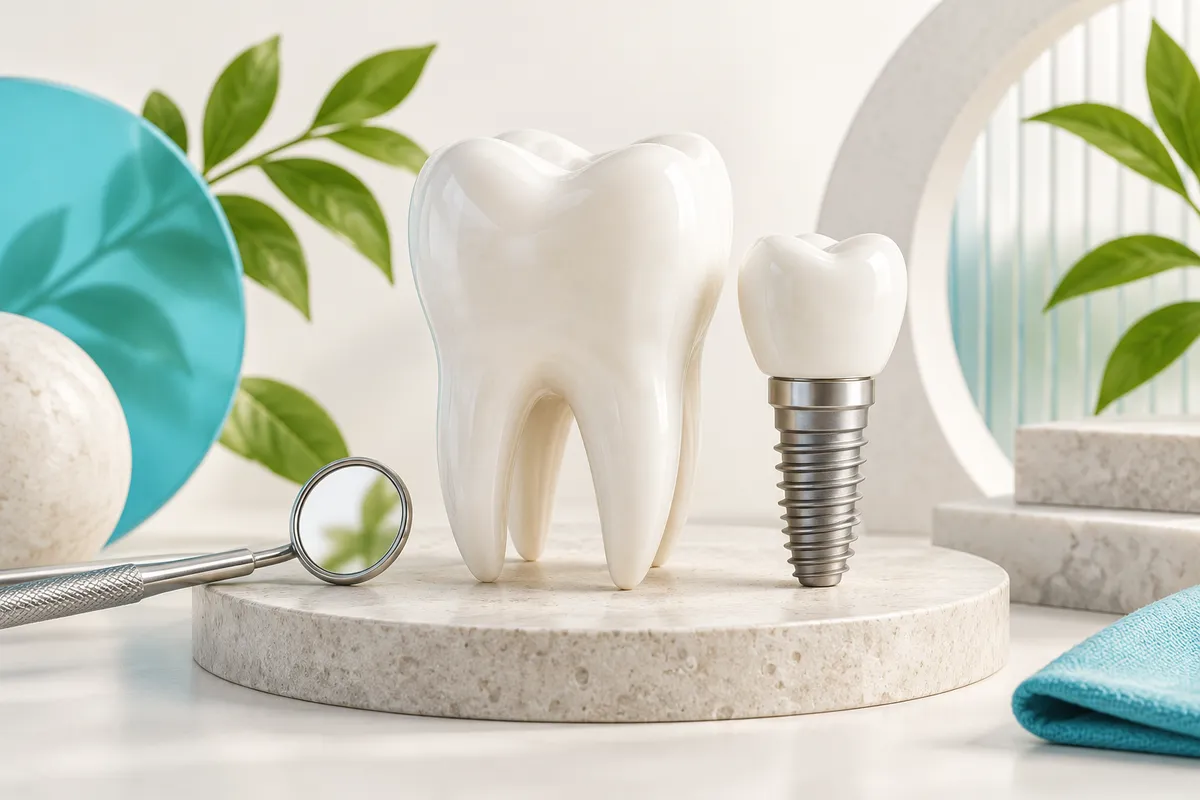
Explain preferences in everyday language. You may want a subtle improvement, a particular balance between front teeth or a result that looks natural beside your existing teeth. The consultation should explore those preferences and the limits of the available options. Ask how any preview or model is intended to be used. A visual simulation is a communication tool; it is not proof that a particular appearance can be delivered exactly or that one procedure is suitable for every person.
Keep time for a considered decision. If a proposed plan involves several teeth, ask for the recommendation tooth by tooth, with the reason for each intervention and the alternatives discussed. A full explanation helps you compare the extent of treatment rather than choosing according to the number of restorations in a package. Our cosmetic dentistry in Istanbul category develops this conversation around treatment planning, practical questions and the importance of understanding the complete proposal.
Understand the options before choosing a label
Dental implants, crowns, veneers, bridges and orthodontic treatment address different problems.
- Their names should not be used as interchangeable descriptions of a smile makeover.
- Ask your dentist to explain what is being changed, what will support the result and which parts of the treatment are irreversible.
- If you have been offered a combination of procedures, discuss why they are combined and whether the order matters.
A clear explanation is more useful than a long list of brand names.
An implant is an artificial replacement for a tooth root and may support a crown, bridge or denture. The Guy's and St Thomas' dental implant overview describes assessment, possible bone grafting, placement and restorative stages. Some stages may involve multiple visits. Ask which parts apply to your proposed plan and which remain uncertain until examination; a short travel package should not be interpreted as proof that all stages can be completed within it.
For concerns about tooth position, ask whether an orthodontic assessment is relevant before assuming that a restorative approach is the only route. If cosmetic changes are your priority, discuss what can be preserved as well as what can be altered. You do not need to choose among unfamiliar procedures alone. The dental techniques and planning section is designed to help you prepare a more focused conversation with the dentist responsible for the recommendation.
Ask how the treatment will be staged
The proposed sequence of care is a central part of dental travel planning. Ask which appointments involve assessment, which involve treatment and which check the fit, comfort or progress of the result. Some plans can require a period between stages. Others may change after the dentist has completed the examination. Record what is confirmed and what remains conditional so that you can plan leave and travel with the right amount of flexibility.

A useful written outline should identify the intended work, the expected sequence and the reason for any interval. If temporary restorations are part of the plan, ask what their purpose is and what instructions apply while you have them. If the final restoration will be made later, establish how that visit will be arranged and what could affect the timing. These questions help you understand the whole course of care, not only the first appointment abroad.
Ask how proposed changes would be discussed. You may arrive expecting one course of treatment and learn that the clinical findings support another. Before travel, agree that a material change should be explained with its implications for cost, timing and consent. You should have the opportunity to understand the revised recommendation. The patient journey guide connects this kind of treatment planning with practical arrangements for appointments, accommodation and the return home.
Read the cost of dental treatment in Turkey properly
Dental treatment costs in Turkey become meaningful when the scope is clear. An offer for one restoration is different from an offer covering several teeth, preparatory treatment or a series of visits. Ask for the proposed work to be itemised in plain language. Include the tooth or area concerned, the type of intervention and the stages covered. The number at the bottom of a quotation is not enough to show whether two plans are comparable.
Material names may be part of the discussion, but they should not replace an explanation of clinical suitability, construction and maintenance. If a laboratory or implant system is specified, ask which documents you will receive and how future care can be organised. Also clarify whether checks, adjustments or additional visits are included. A phrase such as comprehensive package needs a written definition, especially when treatment and travel services appear in the same offer.
Build your own total travel budget alongside the clinical quotation.
- Consider flights, accommodation outside any included period, meals, a companion and the possibility of a further visit.
- Ask for payment and cancellation terms before making a commitment.
- A lower initial figure may not represent the same scope as a higher one; the practical comparison is between complete, understandable plans.
Cureista can help organise the questions, while the dentist explains the treatment and the basis of the clinical recommendation.
Make the consultation work for you
Prepare three or four priorities before speaking with the dentist. For example, you may want to know whether a tooth can be preserved, how a gap could be managed or which options exist for improving alignment. Bring the concerns that would change your decision, including discomfort, anxiety about treatment, the time you can spend away and your ability to return for further visits. These details make the discussion more relevant than a general request for the best package.

The treating team should explain what health information they need. This can include medical conditions, allergies and current medicines, as well as earlier dental treatment. Provide accurate information and ask for clarification when a question is unclear. Do not change prescribed medicines based on a general article or another traveller's experience. Instructions about preparation, pain relief or aftercare need to be appropriate to you and come from the responsible clinical team.
Write down the explanation you receive and ask about anything that remains ambiguous. The dental consultation questions help separate the desired appearance, the dental findings and the travel arrangements. If you want a family member involved, make that preference known while respecting your privacy. You should be able to explain why each part of the plan is proposed and what happens if you choose an alternative or decide to wait.
Plan travel around dental appointments
When considering dental treatment in Istanbul, the practical schedule should follow the clinical plan. Confirm the location of the appointments, the intended sequence and the time allowed for checks before you arrange travel around them. Ask what happens if a stage cannot proceed as originally expected. Flexible arrangements can be particularly useful when the first in-person assessment may change the scope or when further appointments are needed to complete the treatment properly.
Think about everyday comfort during the trip.
- Discuss with the treating team whether you need a companion, what eating arrangements may be relevant after the proposed procedure and which activities need to be postponed.
- These points depend on the treatment.
- A tourism itinerary should remain secondary to attending the required appointments and following clinical instructions.
Choosing accommodation by its appearance alone can overlook practical access to the facility and the demands of your appointment schedule.
Country-specific pages provide a place to organise departure questions. Explore dental treatment in Turkey by country, including preparation for travellers from Morocco and Algeria. Use official sources to check entry and document requirements for your passport. The country pages help frame the planning conversation; they do not promise a visa decision, a particular flight route or a fixed number of visits.
Understand aftercare and future maintenance
Dental treatment continues to matter after the appointment is over. Ask the dentist for written care instructions and the schedule for checks. Discuss how to clean around the proposed restoration or implant, what changes deserve attention and who will assess a problem. The Guy's and St Thomas' aftercare information is a general reference for implant care; your own instructions should reflect the treatment you actually receive.

Before leaving Turkey, ask what documentation a local dentist may need later. This could include a treatment summary and details of restorative or implant components where relevant. Keep copies in a secure place. If you expect routine care to continue in your home country, discuss that arrangement early rather than assuming that any future appointment is included in the original quotation. Clear records help the next clinician understand the work that has been done.
Ask what a warranty or guarantee statement means if one is offered. The relevant questions are the written conditions, exclusions, review requirements and practical process for requesting assessment. Do not interpret a promotional phrase as a promise that no problem can occur. A restoration may still need maintenance, and an individual concern may require examination. Knowing the route for help is more useful than relying on a broad reassurance without an explanation of how it works.
Keep consent and communication clear
A good treatment discussion gives you room to ask questions and choose. If you do not understand a proposed intervention, request an explanation in a language you can follow comfortably. Confirm whether interpreting is included or arranged separately and how you will communicate directly with the dentist. The aim is not simply to translate the name of a procedure, but to understand the alternatives, possible disadvantages and responsibilities that come with your decision.
Separate coordination from clinical advice. Cureista can help connect your enquiry with the appropriate conversation and organise practical questions; the treating dentist is responsible for the clinical assessment and recommendation. Keep that distinction clear when messages pass between several people. If a response affects your health, medication or suitability for treatment, ask for confirmation from the clinical team rather than relying on an informal summary of what someone else understood.
You can also set boundaries around information sharing.
- Ask why a record is needed, who will receive it and how it should be sent.
- A first enquiry can usually describe your area of interest without including detailed health information in a public or unsecured message.
- More specific records can follow through the agreed private process.
In the local preview, the contact form is disabled while the receiving arrangements are being finalised.
Start your dental journey with Cureista
You may be ready to travel, or you may simply want to understand whether a suggestion you received makes sense. Both are reasonable starting points. Tell us which dental concern you would like to discuss, where you will be travelling from and how you prefer to be contacted. If you already have a proposed plan, mention that you want to review its scope and next steps. You do not need to send a complete medical file in the first message.

The strongest next step is a focused conversation. It can establish whether you need an examination, which questions should go to the dentist and what remains to be confirmed before travel. It should leave you with a clearer understanding of your options rather than pressure to make an immediate commitment. Suitability, the treatment sequence and the final clinical recommendation remain individual decisions for you and the treating professional.
Explore the related planning pages and keep a short list of the answers you still need.
- When the contact channel is activated, the form beside this guide will make it easy to introduce those priorities.
- For now, the preview shows the intended route while keeping submission disabled.
Your smile, oral health and practical circumstances belong in the same discussion; Cureista is here to help you begin that discussion with a clearer sense of what matters.
A practical map of dental treatment choices
You can organise a dental consultation around four different aims: managing disease, restoring a damaged tooth, replacing a missing tooth and changing the appearance or position of teeth. A single person may have concerns in several groups. The useful starting point is to identify which aim belongs to each proposed step. This makes it easier to understand why a dentist might recommend addressing one issue before discussing another, even when the visible smile is your main reason for enquiring.
| Your main concern | A useful starting discussion | What the consultation needs to establish |
|---|---|---|
| A painful or damaged tooth | Diagnosis and tooth-preserving options | The cause, urgency and realistic alternatives |
| A missing tooth or several gaps | Replacement options and the bite | What could support a replacement and how it would be maintained |
| Colour or shape of visible teeth | Cosmetic assessment | Whether the concern is cosmetic, clinical or both |
| Crowding or tooth position | Orthodontic assessment | What movement is proposed and how monitoring would work |
| Several old restorations | A review of each restoration | Which need attention and which can remain under observation |
| Difficulty with an existing denture | Fit, comfort and replacement assessment | The specific problem and the options for improving function |
Treat this table as a way to describe your goal, not as a treatment selector. For example, a dark tooth and generally darker teeth do not necessarily raise the same question. Similarly, disliking a gap does not identify the most appropriate replacement. Ask the dentist to explain the findings that connect your concern to the proposed solution. If that connection is missing from an initial message, make it the subject of the next conversation with the clinical team.
Read a tooth-by-tooth plan without getting lost in codes

A treatment plan can look complicated when it uses tooth numbers, abbreviations and material names. Ask for a plain-language version alongside the clinical record. It should let you identify the tooth or area, the finding, the proposed treatment and whether a decision is still provisional. You do not need to learn dental charting to give informed consent. You do need to recognise the part of your mouth being discussed and the reason the dentist proposes changing it.
One useful exercise is to read a single line aloud in your own words: this tooth has this problem, this option is proposed, and this alternative was discussed. If you cannot do that, ask the dentist to clarify that line before moving on to the whole plan. This is especially helpful when a proposal contains many restorations or mixes replacement teeth with work on natural teeth. The same treatment name repeated across several lines should still have a reason attached to each tooth.
Keep the clinical chart separate from your own comparison notes. Your notes might say upper left chewing area or front tooth that concerns me, but the professional record needs precise identification. Ask the team to show how the two descriptions correspond. This reduces the chance of a misunderstanding when a coordinator discusses appointments, a dentist discusses findings and a laboratory description appears in the final quotation. A clear record benefits every later conversation, including care after you return home.
Tooth preservation belongs in the conversation
If extraction or extensive restoration is proposed, ask what tooth-preserving alternatives were considered and why the dentist favours the recommendation. The answer should relate to the condition of that tooth rather than the convenience of a package. You can ask whether another opinion would be useful when the decision is substantial or when two clinicians have proposed very different approaches. Seeking an explanation does not commit you to delaying necessary care; it helps you understand what is urgent and what can be considered further.
The NHS overview of root canal treatment explains treatment of infection within a tooth. It is one example of why a damaged tooth and a missing tooth represent different clinical questions. Whether a particular tooth can be retained, how it would be restored afterwards and what its outlook may be require assessment. An online photograph cannot provide those answers reliably. Avoid choosing extraction simply because a replacement is described more attractively in an advertisement.
For your notes, divide the discussion into the immediate problem and the longer-term plan. Ask what happens if the tooth is treated, what happens if it is removed and what happens if you postpone the proposed intervention. These are questions for the treating dentist, who can explain the consequences in your circumstances. Record any uncertainty honestly. A conditional recommendation can be appropriate when additional examination is needed; it should not be presented as a settled promise before those findings exist.
Gum health before a cosmetic decision

Gum health is part of planning dental treatment, even when the first enquiry is about a brighter or more even smile. NIDCR's periodontal disease information describes disease affecting tissues around teeth and explains that professional assessment matters. Bleeding gums, changes around teeth or other concerns deserve a dental discussion. A cosmetic photograph may not reveal the full situation, and a visually attractive proposal does not establish that the supporting tissues are ready for the proposed work.
Ask whether the plan includes a gum assessment and whether any findings would change the sequence. The practical question is not simply whether cleaning is included in a package. It is what the dentist has found, what needs attention and how progress will be reviewed. If an earlier stage is required, find out whether it can be organised locally, whether the treating dentist needs updated records and when the restorative plan should be reconsidered. Do not assume that every stage must happen during the same trip.
This discussion also helps you understand future maintenance. Ask who will demonstrate the cleaning approach appropriate to the planned restorations and how routine reviews will be arranged after you return. If cleaning is difficult because of dexterity, access or discomfort, say so during assessment. A plan should be workable in your daily life. The aim is to choose care you can understand and maintain, not merely to approve an appearance shown on a screen at the first appointment.
Dental implants in Turkey: identify every component
An implant proposal should make clear which components and stages the quoted amount covers. The FDA's patient information on dental implants distinguishes the implant body, the connecting abutment and the artificial tooth or teeth it supports. It also advises keeping the implant brand and model in your records. These distinctions matter when comparing an advertised implant price with a proposal that includes the completed restoration. The two figures may describe different parts of the same treatment journey.
Ask the dentist to label the stages in ordinary language: assessment, any preparatory work, placement, reviews and the restoration. Then ask the coordinator to connect those stages to the quotation and appointment schedule. Keep clinical suitability with the dentist; use the written schedule to organise the practical arrangements. If the word implant appears alone on an invoice, request a description of the included components and whether later restorative work is covered. This is a scope question, not a reason to assume the offer is misleading.
A second useful question concerns records for future maintenance.
- Establish which details you will receive when treatment is completed and whom a future dentist can contact if they need clarification.
- Brand recognition by itself does not answer questions about individual suitability, clinical technique or follow-up.
- A well-documented plan connects the device details to the actual treatment provided.
Keep those records with your treatment summary rather than relying on a promotional brochure that may cover several different systems.
Staged implant treatment and the return-visit question

Some dental implant plans involve separate stages and an interval before the final restoration. Guy's and St Thomas' implant information describes assessment and treatment stages, including circumstances in which bone grafting may be discussed. Your own sequence depends on clinical findings. Ask which stage a proposed visit would complete and what you would leave with afterwards. The phrase treatment completed should have a specific meaning in the written plan, especially if temporary and final restorations are both involved.
For travel planning, use milestones instead of assuming a fixed calendar. A milestone might be completion of assessment, a clinical review before the next stage or confirmation that final restorative work can proceed. Ask who decides that a milestone has been reached and how you will be notified. This gives you a way to plan a possible return without treating an estimated interval as a guarantee. It also clarifies whether a date is a reservation, a working estimate or a clinically confirmed appointment.
| Stage question | Information to record | Travel consequence to clarify |
|---|---|---|
| What is planned for the first visit? | Assessment and proposed procedures | Appointment dates and provisional length of stay |
| What remains afterwards? | Reviews and later restorative work | Whether another journey may be needed |
| Who confirms readiness for the next stage? | Responsible clinician and review process | When a later booking can be finalised |
| What if the plan changes? | Revised scope and consent discussion | Changes to accommodation, leave and cost |
Do not shorten a clinically necessary sequence to fit a holiday booking. If the proposed schedule does not fit your available time, explain that constraint before committing. The appropriate response may involve different dates, local preliminary care or reconsidering the overall plan with the dentist.
Crowns, veneers and bridges: keep the purpose visible
The NHS dental treatments guide describes crowns as restorations covering a tooth, veneers as facings and bridges as fixed replacements for missing teeth. These are different interventions. A smile makeover label can conceal that difference if it is used as the only description. Ask which teeth would receive which treatment, what supports the restoration and how much natural tooth structure would be altered. Understand the proposal before comparing the number of units in a package.
You can make the discussion more precise by asking the dentist to separate three explanations: why treatment is proposed, why this type of restoration is proposed and why the specified material is appropriate. Those explanations are related, but one does not replace the others. A material described as premium does not tell you why a tooth needs a crown. An attractive shade does not explain why a veneer is preferable to an alternative. The clinical reasoning should remain visible throughout the discussion.

If a plan changes from one restoration type to another after examination, ask for the revised tooth-by-tooth outline. Check how the change affects preparation, appointments, maintenance and price. Give yourself space to understand the difference rather than treating it as a simple product upgrade. For a detailed discussion of aesthetic preferences and preserving a natural appearance, continue to cosmetic dentistry in Istanbul, then bring the questions that matter to your own consultation.
Material names: turn a sales comparison into useful questions
People researching dental treatment in Turkey often encounter lists of material names before they understand the proposed restoration. Start with the clinical task, then discuss the material. Ask what features matter for the tooth and location concerned, what alternatives are available and how the dentist explains the trade-offs. Do not rank options solely by a label such as strongest, most natural or most advanced. Those descriptions need context, and no general website can determine the appropriate choice for your mouth.
A useful material discussion also covers the practical future. Ask how a damaged restoration would be assessed, whether repairs or replacement might be considered and which records would help another dentist understand the work. If the quotation specifies a particular system or laboratory process, check that the final treatment summary identifies what was actually used. Your aim is traceability and understanding. It is not necessary to collect technical specifications that neither you nor your future clinician can connect to the completed restoration.
| A broad claim you may hear | A more useful question |
|---|---|
| This is the best material | Why is it suitable for this tooth and this treatment goal? |
| This looks completely natural | How will shape, shade and proportions be discussed with me? |
| This lasts for many years | What maintenance, review and replacement considerations apply? |
| This is an upgrade | What changes clinically and practically compared with the original option? |
Keep the answers alongside the written plan. When comparing offers, compare the explanations and actual scope as well as the labels. This gives you a clearer basis for a follow-up conversation and helps prevent material terminology from dominating a decision that also involves oral health, consent and continuity of care.
Teeth whitening and existing restorations
Teeth whitening is a different discussion from replacing or covering teeth. The NHS whitening guide explains that whitening lightens natural teeth and does not change the colour of crowns, dentures or implants in the same way. It also describes possible sensitivity and gum irritation. Tell the dentist about existing restorations and what you hope to change. A uniform-looking result may require a more considered conversation than choosing a whitening treatment from a list of services.
Ask how the dentist would assess the cause of the colour concern and whether whitening is appropriate before discussing a desired shade. If other restorative treatment is proposed, ask how colour decisions fit into the sequence. Avoid planning a cosmetic schedule around an event until the team has explained what can reasonably be assessed and completed. A wedding date or business trip is useful information for planning, but it does not establish treatment suitability or guarantee a particular appearance by that date.
Bring reference photographs as a way to explain preferences, not as a specification the dentist must reproduce. Lighting, editing and the surrounding smile can change how colour appears in a picture. Ask to discuss the intended result in person and understand the limits. If your goal is a modest change, say so directly. The consultation should begin with your priorities and oral condition, rather than assuming that every person searching for cosmetic dentistry in Turkey wants the brightest available shade.
Orthodontic treatment in Turkey needs a continuing-care plan
Orthodontic treatment involves moving teeth and monitoring that process. The NHS braces guide describes assessment, adjustments and retainers after active treatment. For someone considering treatment abroad, the central planning issue is continuity. Ask who will supervise the whole course, where reviews will happen and how problems with an appliance would be managed between appointments. Starting treatment during a visit to Istanbul is only one part of a much longer arrangement that needs to work where you normally live.
Describe your travel pattern honestly. Someone living between two countries has different practical options from someone who can make only one short trip. If another orthodontist would provide later care, establish that agreement before starting rather than assuming a transfer will be straightforward. Ask which records would be needed, whether the receiving clinician accepts the proposed arrangement and how fees would be divided. These questions do not determine the clinical choice, but they can reveal whether the suggested delivery of care is workable.
Discuss your goal in functional as well as visual terms. If your main concern is one visible tooth, ask how the proposed treatment relates to the rest of the bite and whether a limited approach has limitations you should understand. If the plan includes other dental procedures, ask which clinician coordinates their order. Our dental techniques and treatment planning page gives you a place to organise these connected questions before discussing an individual recommendation.
Clear aligners: ask about supervision, not just the trays
The FDA's clear aligner information describes custom removable trays used to move teeth under professional supervision. It emphasises assessment and monitoring, including the value of in-person reviews. A box of trays is not a complete explanation of the care arrangement. If you are considering aligner treatment in Turkey, ask who reviews progress, which appointments require attendance and how the plan changes if movement does not follow expectations. The treating clinician should explain what is appropriate for you.

Bring practical questions about your routine. Ask how travel, work and your ability to attend reviews fit the proposed plan. If you are shown a digital animation, request an explanation of what it represents and which parts depend on your response to treatment. Understand the difference between a planning visualisation and a confirmed outcome. Avoid treating a projected final image as a guarantee or assuming that a shorter advertised course will meet the same goals as a different clinical proposal.
Clarify the quotation's boundaries. Ask whether additional assessments, changes to the tray sequence, replacements for lost trays and retention are addressed in the written terms. Do not assume all of these are included or excluded; obtain the actual description. If remote check-ins are offered, ask what information the clinician can assess that way and when an examination would still be needed. A clear plan makes the professional relationship visible, so you know whom to contact rather than relying only on an app or shipment schedule.
Digital dentistry and smile previews: separate tools from promises
Digital scans, photographs and smile previews can help a dentist explain a proposed plan. Their value depends on how they are used in your assessment. Ask what each image or model is showing and which questions it can answer. A scan of tooth surfaces, a radiographic image and an aesthetic simulation are not interchangeable records. You do not need to select the technology yourself. You need the clinician to explain how the information supports the decision being proposed.
A useful preview discussion includes what you like, what you do not like and what remains uncertain. You might prefer less symmetry, a different tooth proportion or a colour closer to your natural teeth. Put these preferences into words and ask how they will be recorded. If a temporary trial or mock-up is proposed, clarify its purpose, its limitations and whether it is included in the quotation. Do not assume that every digital plan includes a physical trial or that approving a picture completes the consent discussion.
Compare the promised process rather than counting devices in a brochure. Ask when you will see the proposal, who will explain it and what opportunity you will have to discuss changes before an irreversible stage. If the team uses a laboratory, establish how your preferences reach the person making the restoration. Technology can support communication, but the important result is a shared understanding of the intended treatment and the limits of what can be predicted before it is carried out.
Existing dental work deserves its own review

An enquiry about dental treatment in Istanbul may concern work completed years earlier or treatment started elsewhere. Describe what was done, when it was done and what is troubling you now. If you have the previous treatment summary or component details, ask whether the reviewing dentist would find them useful. Avoid assuming that every old restoration needs replacing because it is old, or that a new problem proves the original treatment was inappropriate. The current condition needs examination before those conclusions can be discussed.
Ask the dentist to separate findings from uncertainties. A visible chip, a change in comfort and a concern about appearance may lead to different investigations. If removal of an existing restoration is proposed to assess what lies beneath, ask how the team would discuss the next decision once more information becomes available. The written proposal should identify where the scope could change. This is particularly important if your travel plans leave little room for additional appointments or a revised restorative stage.
For comparison purposes, request a description of the intended outcome of the review.
- It may be advice, a repair proposal, replacement options or a referral for a more specialised opinion.
- Do not treat every consultation as a commitment to redo all previous work.
- A focused assessment can help you understand which issues need attention and which questions remain open.
That clarity can be valuable even when the eventual decision is to continue care closer to home.
Dry mouth, decay risk and everyday maintenance
Dental planning should take account of the daily conditions in which restorations will function. NIDCR's dry mouth information explains that persistent dry mouth can affect oral health and may be linked to medicines or medical conditions. Its tooth decay guide explains the role of dental assessment and prevention. Tell the dentist about persistent dryness, recurrent decay or difficulties keeping teeth clean. Do not stop a prescribed medicine because you think it may be contributing to a symptom.
The practical planning question is how the proposed treatment fits your ongoing needs. Ask what preventive support, cleaning instruction and review arrangements should accompany it. If you have previously struggled with a complicated cleaning routine, explain the difficulty directly. The clinician can then discuss what is realistic rather than assuming that a written leaflet will solve every problem. If a companion helps with daily care, ask whether they can be included in the explanation with your agreement.
Make a distinction between buying products and understanding a routine. A list of recommended items is useful only if you know their purpose, how the treating team wants you to use them and whom to ask if they are uncomfortable or difficult to obtain at home. Request instructions appropriate to the treatment you actually receive. General online recommendations cannot account for all the details of your mouth, the restorations and the medical history you have discussed with the dentist.
Dental anxiety: describe what would make care manageable
Anxiety can affect whether you seek a consultation at all. You can mention it in your first enquiry without needing to justify it or provide a detailed personal history. If possible, describe the part that is hardest: uncertainty, sounds, previous pain, injections, loss of control or difficulty staying in the chair. This helps the clinical team discuss a suitable approach. Ask whether the initial appointment can include time to explain the plan and agree how you will signal that you need a pause.
If sedation is discussed, ask the responsible clinician about assessment, suitability, preparation, supervision and the arrangements afterwards. Different approaches have different requirements, so a generic promise of comfortable treatment is not enough to plan travel or accompaniment. Obtain individual instructions before making assumptions about driving, flying or being alone. The enquiry team can organise a conversation, but the clinician needs to explain the clinical option and its implications. Avoid choosing a technique solely because it sounds familiar from another person's experience.
You can also ask about the pace of appointments and communication. For example, you may prefer the dentist to explain each stage before beginning, or you may want a companion present for the planning discussion. These are preferences to discuss, not guaranteed features of every setting. Record the agreed arrangements so they do not have to be reconstructed on the treatment day. A considered plan recognises that understanding and comfort affect the experience of care as well as the technical procedure.
Comparing dental treatment costs in Turkey: a complete worksheet
Build a comparison around defined services rather than a headline amount. Use the same headings for every proposal and mark unanswered items explicitly. Keep the clinical scope in the first part of the worksheet, travel services in the second and your own expenses in the third. This prevents a hotel inclusion from being mistaken for a difference in dental care. It also makes it easier to ask the relevant person about each item instead of sending one broad question about why an offer costs more.
| Worksheet field | What to enter | What to avoid assuming |
|---|---|---|
| Assessment | Examination and records included in the proposal | That every requested investigation is included |
| Planned treatment | Tooth-by-tooth or area-by-area description | That equal numbers of units mean equivalent work |
| Temporary stage | Any provisional restoration and its purpose | That a temporary is the final restoration |
| Final stage | Restoration, fitting and specified checks | That an implant-only price includes all later stages |
| Follow-up | Review format, responsibility and conditions | That all future visits are free |
| Travel services | Accommodation nights and named transfers | That flights, companions or extra nights are included |
| Changes | Revision, cancellation and refund terms | That one provider's terms apply to every booking |

Once the worksheet is filled in, highlight differences in scope before calculating differences in price. If one proposal includes a second journey and another leaves it unspecified, ask for clarification before treating the totals as comparable. A missing answer is useful information about the current state of the proposal. It should remain visible until resolved, rather than being assigned a convenient zero so the spreadsheet looks finished.
Keep any estimate you make yourself labelled as an estimate. Record the original currency, the quotation date and the amount actually payable under the terms. Exchange calculations can help your household budget, but they do not replace the provider's written payment conditions. The goal is to understand the commitment you are considering and the questions still outstanding, without inventing a market average or assuming that a low price or high price proves clinical quality.
A fictional budget example: why the headline total can mislead
The following example uses invented units solely to demonstrate comparison. It is not a Cureista price, a Turkish market estimate or a recommendation between providers. Imagine that two proposals describe equivalent planned dental services after the clinical differences have already been clarified. Offer A lists a treatment amount of 100 units, while Offer B lists 118 units and specifies certain travel services. You still need to check which expenses are outside each offer before comparing the personal budget required for the journey.
| Illustrative item | Offer A | Offer B |
|---|---|---|
| Defined treatment scope | 100 units | 118 units |
| Accommodation for the specified visit | 12 units extra | Included in the stated scope |
| Specified transfers | 8 units extra | Included in the stated scope |
| Comparable subtotal | 120 units | 118 units |
| Flights and personal spending | Excluded | Excluded |
| A possible later visit | Requires clarification | Requires clarification |
In this invented example, the initially smaller number does not produce the smaller comparable subtotal. That observation says nothing about which clinical plan is appropriate or which provider offers better care. It demonstrates why inclusions matter. If the treatment scope is not equivalent, the arithmetic cannot make it equivalent. Return to the clinical explanation before drawing a conclusion from the subtotal, and keep the unresolved later visit outside any claim that the whole journey has been fully priced.
You can adapt the worksheet to actual written proposals without using these fictional amounts. Add only confirmed charges, identify provisional items and separate expenses you control from services the provider supplies. If you decide to travel with a companion, for example, their flight and room arrangement belong in your planning even if they are not part of the dental quotation. An honest budget can contain unanswered questions; resolving them is part of preparation.
Package wording: translate each promise into a deliverable

Words such as comprehensive, premium or all-inclusive do not describe a service precisely enough to compare it. Ask what they mean in the actual proposal you receive. For accommodation, the useful details may include the number of nights, room arrangement and booking conditions. For transport, clarify which journeys are covered. For interpreting, ask at which appointments it is available and how clinical explanations will be communicated. The point is to understand the service, not to assume that a broad label has the same meaning across providers.
A dental package also needs a clear boundary between confirmed services and treatment-dependent decisions. If an additional procedure would be considered only after examination, ask how it would be explained, priced and consented to. If a review might lead to another appointment, find out how that appointment would be arranged. These contingencies should be understandable before you are relying on a return flight or a non-refundable hotel booking. The written plan can identify conditions without pretending that every clinical detail is already known.
| Package phrase | Detail to request |
|---|---|
| Airport transfer | Which airport, which journeys and how arrival changes are handled |
| Accommodation included | Nights, room type, companion arrangements and extra-night terms |
| Aftercare included | Responsible clinician, review format, scope and exclusions |
| Smile design included | What assessment or preview is provided and when preferences are discussed |
| Warranty available | Written conditions, assessment process and costs outside the stated coverage |
Keep these answers with the quotation, especially when they arrive through different channels. A single dated summary makes it easier to see whether the description you accepted matches the arrangements being booked. If something important changes, ask for the relevant part to be updated rather than relying on a conversation that may be difficult to retrieve later.
Three planning scenarios for a more useful consultation
The following scenarios are fictional. They illustrate ways to organise questions and are not patient stories, clinical recommendations or examples of Cureista results. Their purpose is to show why two people searching for dental treatment in Turkey may need very different conversations. Use the questions that match your concern, and let the dentist explain which options are clinically relevant after assessment. You do not need to identify with every detail for a scenario to help you prepare.
Scenario one: a single missing tooth and limited travel time
A traveller wants to replace one missing tooth and has only a short period of leave. Their first message asks for an implant package that fits those dates. A more useful enquiry would describe the missing tooth, mention any previous assessment and explain the travel constraint. The dentist can then discuss replacement options and the likely stages that need clarification. The time available is an important practical fact, but it should not become the basis for declaring a particular clinical sequence suitable.

The traveller's key questions concern what can be established before arrival, what the first visit would involve and whether another visit might be necessary. They should ask what they would leave with after each stage and how progress would be reviewed at home. If the proposed course does not fit their leave, they can discuss different dates or other arrangements before paying. The useful outcome of the enquiry is a realistic next step, even if that next step is an assessment rather than an immediate procedure.
Scenario two: dissatisfaction with the colour of otherwise familiar teeth
Another traveller wants a brighter smile before a family event and has seen packages involving many restorations. They do not know whether they need whitening, veneers or something else. Their enquiry should describe the colour concern and mention existing crowns or fillings rather than requesting a fixed number of veneers. The dentist can explain what needs examination, which options might be relevant and which limitations matter. An event date helps organise the discussion, but it should not pressure the person into irreversible work they have not understood.
Their useful comparison is between the extent of the proposed changes, the alternatives and the reasons for the recommendation. They can ask how a proposed shade would relate to existing restorations and whether a preview would be available. If a clinician recommends more extensive treatment than expected, they can request a tooth-by-tooth explanation and time to consider it. The goal is a decision connected to the actual concern, with a clear understanding of what would be preserved and what would be changed.
Scenario three: several old restorations and conflicting opinions
A third traveller has received two different plans for existing dental work. One suggests replacing many units, while another suggests a more limited approach. They should organise the existing reports, identify where the plans differ and ask each clinician to explain the findings behind the recommendation. A coordinator can help arrange the discussion, but cannot resolve a clinical disagreement by choosing the cheaper or more comprehensive package. The traveller needs to understand whether the difference comes from information, priorities, uncertainty or a genuine difference in clinical judgement.
The practical next step may be another assessment or a focused second opinion.
- Useful questions include which parts are urgent, which findings are confirmed and what remains uncertain until further examination.
- The traveller should also clarify whether previous components can be identified and what records would be useful.
- Their decision record can preserve both the advice received and the reasons for the eventual choice.
This is more informative than a simple list of prices and avoids presenting the largest treatment plan as automatically the most complete solution.
Before you book: match the itinerary to the clinical sequence

Build an itinerary only after you understand which appointments are confirmed and which remain provisional. Write each appointment's purpose beside its date. For example, an assessment, a treatment appointment and a fitting or review are different commitments, even if they take place in the same building. Ask whether laboratory work or a clinical review sits between them. You are checking the sequence and dependencies, not trying to calculate treatment time from the number of teeth on a quotation.
Avoid filling every gap with sightseeing or onward travel. Ask the team how much flexibility the proposed schedule needs and whether any decisions will be made only after the first examination. If your return date is fixed, make that explicit early. The dentist needs to know the constraint before recommending a sequence that depends on your availability. A clear itinerary includes a way to contact the team if transport is delayed, and a process for receiving updated appointment times without losing track of the current plan.
Keep separate confirmation records for treatment and travel bookings. An appointment confirmation does not necessarily establish hotel terms, and a hotel booking does not confirm clinical suitability. If a coordinator arranges both, ask for a summary that identifies the responsible provider for each service. This helps if one part changes while another remains in place. You should be able to tell which booking requires attention and whom to contact without having to reconstruct every message from the initial enquiry.
Travelling from Morocco, Algeria or another country
Departure country can affect the practical questions around language, documents, flight connections and follow-up. It does not determine which dental procedure is suitable. Begin with the clinical discussion, then build the travel arrangements around your passport, residence status and actual itinerary. Check entry requirements through current official channels rather than relying on a general country page or another traveller's experience. Requirements can differ between people travelling from the same airport, and they can change between an initial enquiry and the planned journey.
The Morocco dental travel page and Algeria dental travel page help organise departure-specific questions. If you live in a different country from your nationality, explain both where you will travel from and where you expect to receive routine care afterwards. That distinction can matter when discussing a return visit or sharing records with a local dentist. Do not assume that the person arranging your flight has also confirmed the clinical follow-up arrangements in your country of residence.
Think about communication across the entire journey. Ask which language is available for the clinical consultation, written instructions and later questions. If you will need translation for documents supplied by a home dentist, clarify what format the treating team accepts before paying for a translation. Time differences and working hours also affect routine communication. Record the intended channel for non-urgent questions and the separate instructions for urgent concerns so that an international message thread is not mistaken for emergency care.
Access, accommodation and travelling with a companion
Tell the team about access needs when arranging appointments. You may need step-free access, help with transport, extra time for communication or a companion at the consultation. Describe the requirement concretely rather than assuming that a general accessibility label covers it. Ask the facility and accommodation provider to confirm the details relevant to you. If you use mobility equipment, for example, room access and vehicle arrangements may both need checking even when the appointment location itself is accessible.
A companion can help with practical arrangements, but their role should be agreed with you. Decide whether you want them involved in the planning conversation, which information you are comfortable sharing and who will make the final decisions. If the proposed procedure or sedation arrangement requires an accompanying adult, obtain the clinician's specific instructions. Do not infer those requirements from a different dental procedure or from the experience of someone who travelled under different circumstances.
Ask about the costs associated with the companion separately. Room occupancy, meals and transport may be treated differently from the patient's arrangements. A package that mentions accommodation does not automatically explain these details. Confirm how changes would work if the companion can attend only part of the trip. The aim is a practical plan that supports your care and comfort, with fewer unanswered questions when you arrive in an unfamiliar city for a series of appointments.
The records to request before leaving Turkey
Ask the clinical team which records will be supplied at completion and which may be useful for future care. A treatment summary should identify what was done and when. Where relevant, component information, imaging records and the final restorative details can help a later clinician understand the treatment. Request the documents through the agreed private process and keep them securely. A collection of promotional images is not a substitute for a record of the actual care you received.

| Record or instruction | Practical purpose | Question before departure |
|---|---|---|
| Treatment summary | Explains completed procedures | Does it identify the treated teeth or areas clearly? |
| Component details where relevant | Supports identification of implant or restorative systems | Which manufacturer and model details are available? |
| Care instructions | Explains the agreed home routine | Are these instructions specific to my completed treatment? |
| Review plan | Identifies the next clinical check | Who performs it, where and under what arrangement? |
| Contact route | Makes later questions actionable | Which channel is for routine queries and what should I do urgently? |
| Financial documents | Records accepted services and payments | Does the final scope match the documents I am keeping? |
Open the documents before leaving so you know you can access them and understand their purpose. If a summary is in a language your home dentist may not use, ask how clarification can be obtained. You do not need to interpret every technical field yourself, but you should know who issued the record and whom a future clinician can contact. This is particularly useful if several practitioners or appointments were involved in the course of treatment.
Make follow-up a named responsibility
Before returning home, identify the clinician or team responsible for reviewing the work and the format of the next review. Ask what can be discussed remotely, what would require an examination and how a local dentist might be involved. These are different arrangements and should not be described as interchangeable. A coordinator may help route a message, but a clinical concern needs an appropriate clinical response. Keep the contact instructions with your care documents so they are easy to find when needed.
Discuss practical limits in advance. If a further visit to Turkey were recommended, ask how that would be arranged and which costs would be your responsibility under the agreed terms. If you expect local routine care, confirm that arrangement with the local provider rather than assuming they have accepted it. An aftercare promise becomes useful when the responsibilities, review process and financial boundaries are understood. It should not depend on your ability to interpret a broad guarantee after a problem has already occurred.
For any new or worsening concern, follow the instructions from your treating team and seek timely local assessment when needed. Do not wait for a planned international appointment if the situation requires attention sooner. A remote conversation can support continuity, but it cannot provide every examination or intervention. The planning aim is to know the route for help before you need it, with clear distinctions between routine maintenance, a non-urgent question and a concern that needs prompt in-person care.
Questions people ask about dental treatment in Turkey
Can I receive a final treatment plan from photographs?

Photographs can help explain your concern and organise an initial conversation, but they do not replace the dentist's assessment. Ask which parts of an early proposal are provisional and what information is still needed. If an image-based discussion leads to an estimate, keep that estimate separate from a confirmed recommendation. Before committing to treatment, understand how examination findings could change the scope, price and schedule. A useful preliminary response makes its limits clear instead of presenting every detail as settled.
How many days should I allow in Istanbul?
The answer depends on the proposed procedures, the appointment sequence and whether treatment is staged. Ask for a schedule tied to your actual plan rather than borrowing a stay length from another traveller. Clarify which dates are confirmed and whether checks or fitting appointments may require flexibility. If another visit is possible, include that in the discussion before booking. No single duration covers every dental treatment in Turkey, and a package's hotel nights should not be treated as individual medical advice.
Is a larger smile package better value?
The number of restorations does not establish that a plan is appropriate or good value for you. Ask why each tooth is included and whether alternatives were considered. Compare the clinical scope before comparing the package price. A plan addressing fewer teeth may pursue a different goal from a larger proposal, so the two cannot always be reduced to a price per unit. The useful question is whether you understand and agree with the proposed work and its implications.
Should I choose the cheapest quotation?
Price matters, but compare written scope, responsibility, follow-up and travel costs first. A lower amount may describe fewer services or a different stage; a higher amount does not by itself establish better clinical quality. Use the comparison worksheet to identify unanswered items and ask for clarification. Keep the dentist's recommendation separate from the arithmetic. An understandable quote supports a considered decision, while the suitability of treatment depends on assessment and discussion with the responsible professional.
Can existing crowns be whitened with my natural teeth?
Whitening does not lighten existing crowns in the same way as natural teeth. Discuss the restorations you already have and the appearance you want before choosing a cosmetic plan. Ask how the dentist would approach differences in shade and whether any proposed replacement is necessary for your goals. Do not assume that a whitening appointment will make every visible tooth or restoration match. The consultation should explain the options and the extent of any changes being considered.
Does an implant quotation include the final tooth?
It may or may not, depending on the written scope. Ask whether the amount covers the implant body, connecting components, temporary arrangements and final restoration, as applicable to the plan. Also ask which assessment and review appointments are included. This is why comparing the word implant beside two prices can be misleading. A component-level explanation lets you see what remains to be planned and whether later visits or charges need clarification before you commit.
Can I start braces or aligners during a short trip?
An initial appointment is only part of orthodontic care. Ask how the complete course would be supervised, where in-person reviews would take place and what happens if an appliance is lost, damaged or uncomfortable. If care would transfer to another clinician, confirm that agreement before starting. Your travel availability should be part of the discussion. The relevant issue is whether the continuing arrangement is clinically suitable and practical, not merely whether an appliance can be supplied during the visit.
Will I need to return to Turkey?
That depends on the treatment plan and subsequent clinical findings. Some proposals involve later stages or reviews, and you should ask about that possibility before treating the first journey as the whole course. Record what is known and what remains conditional. Discuss who confirms the next stage, how much notice you would receive and how costs are described. A realistic plan can acknowledge uncertainty without leaving you unaware of the decisions that may affect a future trip.
What if the dentist changes the plan after examination?
Ask for an explanation of the new findings, the alternatives and the implications for cost and timing. A revised recommendation should be discussed before you agree to it. Keep an updated written outline so the treatment and practical arrangements refer to the same version. If the change is substantial, take the time you need to understand it. Having travelled for an appointment should not make a clinical explanation or an informed decision feel optional.
Can I bring a previous treatment proposal for discussion?
Yes, you can mention an existing proposal and ask which records would help the reviewing dentist. Identify the questions you want answered rather than asking only whether the total price is competitive. For example, you may want to understand why a tooth is included, whether treatment is staged or what follow-up involves. The reviewing clinician needs sufficient information to discuss the clinical issues. A coordinator can organise the conversation without pretending to adjudicate a clinical disagreement independently.
What does a warranty actually cover?

The answer is in the specific written conditions, if a warranty is offered. Ask about the assessment process, exclusions, maintenance requirements and any costs outside the coverage, including travel. Avoid interpreting the word as a promise that no complication or replacement can ever occur. Keep the terms that applied when you accepted the proposal. If a statement is unclear, request a plain-language explanation before payment rather than relying on a broad assurance remembered from a sales conversation.
What should my first enquiry to Cureista include?
Describe your main dental concern, the country you would travel from and whether your dates are flexible. Mention if you already have a proposed plan that you want to discuss. Your first enquiry can be concise; it does not need passport details or a complete medical file. Ask how any later records should be shared privately. The purpose is to identify the appropriate next conversation and the information needed for it, while leaving clinical recommendations to the treating dentist.
Turn your reading into a focused next step
Choose the part of this guide that best matches your present decision. If you are exploring appearance, start with cosmetic dentistry in Istanbul. If you are comparing procedures or a proposed sequence, continue to dental techniques and treatment planning in Turkey. If you already have an offer, use the questions for comparing a dental treatment plan to identify the missing explanations. Each route helps you prepare a more specific conversation rather than collecting procedure names without context.
You can draft your enquiry in three sentences. Explain the concern you want assessed, the decision you are trying to make and the practical constraint that matters most. For example, you might be considering replacement of a missing tooth, want to understand the stages and need to know whether a second journey could be required. That is enough to give the next discussion a useful direction. More detailed records can follow through the agreed private process when the clinical team explains what is relevant.
Contact Cureista about your dental treatment plans with the question that remains after reading. The aim is a plan you can understand: the purpose of the proposed care, the professionals responsible, the appointments involved and the arrangements after you return home. Your preferences, oral health and ability to continue care all belong in that conversation. An informed first step makes the rest of the journey easier to organise around your actual needs.
Detailed questions before choosing your treatment plan
Does a dental implant price in Turkey include the crown?
Ask whether the quotation covers the implant, connector and final restoration, and which other work remains conditional. Record the tooth or teeth involved and the planned appointments. A price for one component cannot be compared directly with a complete restoration package. Request a written breakdown before using an advertised per-implant figure to calculate your total.
Are zirconia crowns and veneers in Turkey the same treatment?

No. The material name and the type of restoration describe different aspects of a proposal. Ask whether each tooth is being considered for a crown, veneer or another option, why it is recommended and what preparation it involves. A smile-design label should not replace a tooth-by-tooth explanation of the work you are deciding about.
Can a dental package in Istanbul confirm my final smile before examination?
A proposed design can help discuss preferences, but ask what remains subject to examination and approval. Clarify which version records your choices and when you can review changes. If the treatment scope changes after assessment, request an updated plan and price together rather than relying on the original visual proposal as the complete agreement.
Items to record when comparing proposals:
- Teeth and restoration type
- Implant components
- Laboratory stages
Background for this discussion: NHS · Dental treatments. FDA · Dental implants. These general references do not verify a local provider’s credentials.
Prepare your next step with Cureista using Cosmetic dentistry in Istanbul and Compare a dental treatment plan in Turkey.
Sources and further reference
General information supports a conversation with your clinician. Individual assessment and instructions remain with the treating team.