
On this page
Dental treatment in Turkey should fit both your oral-health needs and the life you will return to. Where you live matters for language, records, appointments and continuing care, but it does not decide which teeth need treatment. Cureista helps you organise a focused discussion with collaborating dentists and clarify the practical services around it. Begin with the problem you want assessed or the change you want to discuss, then build the journey around a plan you understand.
This country hub connects preparation for patients travelling from Morocco and Algeria. It is designed for questions that cross borders: how to compare a proposal, prepare existing records, understand treatment stages and arrange reviews after returning home. Use the main dental treatment in Turkey guide for the wider clinical discussion. You can contact Cureista while you are still deciding what you need explained; an enquiry does not require choosing a smile package in advance.
Begin with a dental priority rather than a package name
Describe what you want help with in ordinary language. You may be concerned about a missing tooth, an existing restoration, comfort when chewing, the appearance of your smile or a recommendation you received elsewhere. Separate the problem you notice from the treatment you think might solve it. This allows the dentist to assess the question without treating an advertising term or a previous estimate as your final clinical decision.
Write down the outcome you hope to discuss and any constraint that matters, such as time away from work or difficulty attending repeated appointments. These are useful facts for planning, but they should not replace the clinical explanation. A short stay does not establish that a proposed intervention is appropriate, and an attractive collection of services does not explain why a particular tooth should be treated. The first aim is a clear assessment conversation, followed by a practical sequence that supports it.
Choose the country guide that matches residence and return care
Your departure airport, nationality and place of residence may describe different parts of the journey. Record them separately. Someone living in Morocco might travel with another passport, while a person departing from Algeria may return to family in a different city before going home. The country guide helps organise these circumstances; it does not assign the same travel requirements or follow-up arrangements to everyone associated with that country.
Pay particular attention to where you will receive ongoing dental care. A trip is easier to discuss when you can explain whether you already have a dentist, what records are available and where you expect to attend any agreed local reviews. Do not assume that a clinician at home has accepted responsibility for another provider's plan without a conversation. Include that question in preparation, especially when the proposal contains several stages or requires later decisions.
Distinguish a smile preference from a dental finding
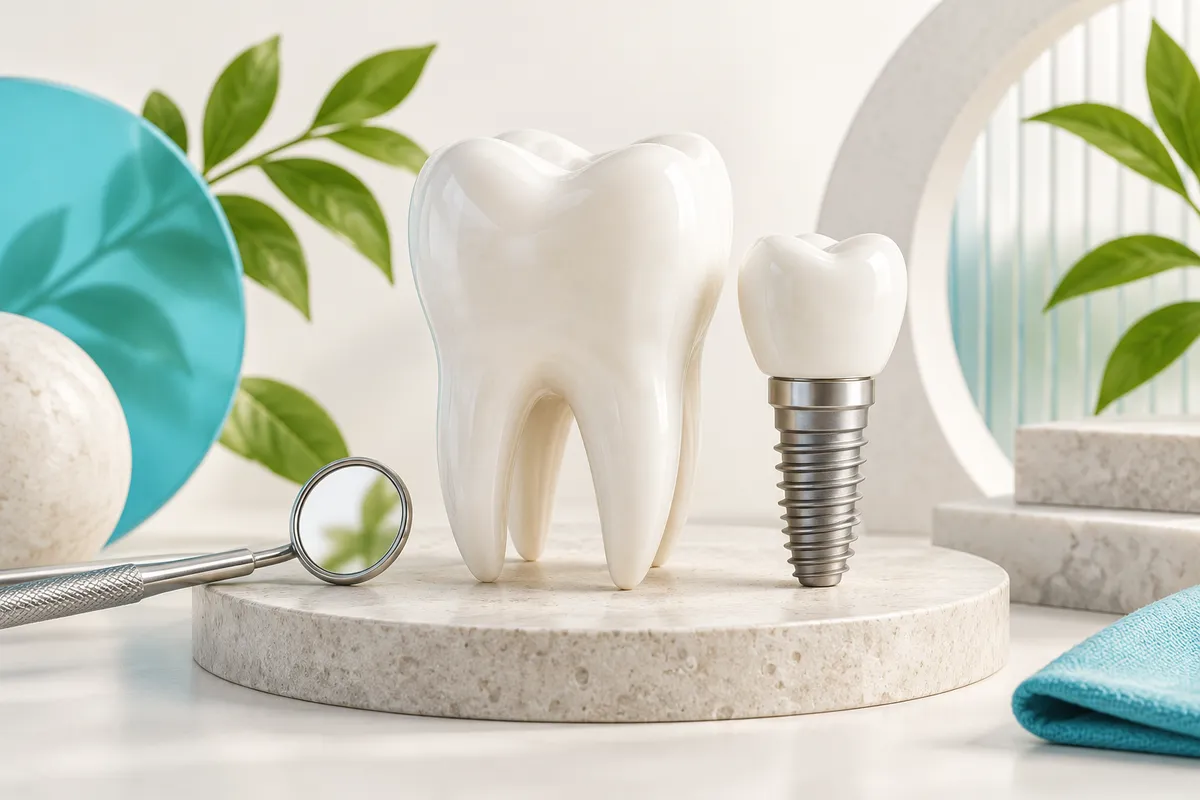
You can ask for a natural-looking appearance, discuss colour or explain which part of your smile concerns you without deciding that every visible tooth needs the same intervention. Ask the dentist to show how the recommendation relates to the examination and to each tooth involved. A photograph may communicate a preference, but it cannot on its own establish the condition of the teeth or the treatment that should be undertaken.
The cosmetic dentistry in Istanbul category explains how to ask about the different options. Bring your preferences into that discussion, including what you want to preserve and what changes you would not be comfortable accepting. This gives the clinician a clearer basis for explaining choices. It also helps you recognise when a proposal is answering a different question from the one you originally wanted assessed.
Ask for a plan you can read tooth by tooth
A written plan should make the intended scope understandable. Ask how the teeth are identified, what is proposed for each and what remains dependent on further assessment. You do not need to memorise a numbering system; you need a clear way to connect the explanation, the clinical record and the quotation. If a number or term is unfamiliar, ask the dentist to show you what it refers to rather than guessing from a diagram found elsewhere.
| Item to clarify | Question for the dental discussion | Why it matters for the journey |
|---|---|---|
| Tooth or area involved | Which tooth or site does this recommendation address? | Prevents an unclear scope from entering the quotation |
| Purpose of the proposed step | What problem or goal is it intended to address? | Connects treatment to your reason for travelling |
| Alternatives discussed | What other approaches are relevant to consider? | Supports a decision before practical commitments grow |
| Sequence | What must happen before the next stage? | Helps distinguish appointments from complete treatment |
| Review arrangements | What assessment or maintenance follows? | Connects the visit to care after returning home |
Keep your personal question list beside the plan, rather than editing the clinical document to insert assumptions. If you receive a revision, ask what changed and why. A clear version history becomes especially useful when several visits or more than one clinician are involved.
Compare treatment names by what they mean
The NHS dental treatment overview distinguishes crowns that cover a tooth, veneers that cover its front surface, orthodontic movement and whitening that changes tooth colour. These are different concepts, not interchangeable names for a smile package. Ask the dentist which approach is being proposed, what it involves for the particular teeth and why it fits the assessment.
Do not assume a term used in a translated advertisement has the same meaning as the term in the clinical proposal. Ask for the exact treatment description and the explanation in a language you understand. If the plan includes several approaches, keep them separate in your notes and quotation. That prevents a single appealing package title from hiding different commitments, appointments or maintenance needs behind one overall label.
Discuss irreversible steps before the appointment day

Ask which proposed changes are irreversible and what alternatives were considered. The Oral Health Foundation highlights the potential harm of unnecessarily aggressive tooth preparation. This makes a tooth-specific explanation important before accepting a cosmetic proposal. It does not establish that any particular reader needs or should avoid a specific treatment; that requires an individual clinical discussion.
Raise this question while you still have space to think, rather than leaving it until travel, accommodation and appointments make the decision feel inevitable. Request clarification if you do not understand what will be altered or why. You can ask for another opinion or more time. Coordination with Cureista should help you obtain the relevant explanation from the collaborating dentist, while your consent remains a personal decision based on information you can understand.
Separate assessment, treatment and completion
Ask what the first visit is intended to achieve. It may be an assessment, a planned treatment stage or a review, and those purposes should not be blurred. A confirmed appointment does not necessarily mean every part of the proposed care will be completed during the same trip. Request a sequence that identifies the decisions expected at each point and the elements still conditional on examination or progress.
Describe any limit on your stay honestly, then ask how it affects the options rather than asking the dentist to compress the plan into a predetermined holiday. If the appropriate sequence does not fit your current availability, you can discuss timing or reconsider the journey. A useful plan explains its dependencies; it does not simply arrange clinical labels around the outward and return tickets you would prefer to buy.
Understand why implant planning may involve stages
Guy's and St Thomas' NHS Foundation Trust describes implant care as involving assessment, implant placement and restorative treatment, with additional steps such as bone grafting for some patients. The implication for travel planning is to ask about your actual sequence rather than assuming either a single visit or a universal two-trip package. Your dentist should explain which stages apply and what determines their timing.
Keep the surgical and restorative parts of the written proposal identifiable. Ask what is included now, what may be arranged later and which reviews connect the stages. If a provisional estimate covers only part of the course, label it accordingly. This avoids comparing a first-stage quote with another provider's broader proposal as though the two documents describe the same completed treatment. Do not infer personal dates from a general source or another patient's itinerary.
Clarify temporary and definitive restorations
If the proposal mentions temporary work, ask what its role is, how it differs from the intended later restoration and what instructions apply while it is in place. The NHS overview notes that a temporary crown may be used while laboratory work is prepared. That general explanation is not a promise about the arrangement or timing for your case. Ask the treating dentist to identify the relevant steps in your own written plan.

Record what needs to be reviewed before moving to the next stage and what to do if a concern arises during the interval. Do not assume that something described as temporary can be treated as a finished result indefinitely, or that every appointment guarantees the next item will be ready. Understanding the status of each restoration helps you ask the right question when deciding whether a journey covers assessment, interim care or a later completion stage.
Make alignment planning workable across borders
If you want to discuss tooth alignment, ask how the proposed approach would be supervised where you live. Clarify who provides assessments, what visits are expected and how problems or changes are handled. Do not assume that receiving an appliance or a set of instructions completes the care relationship. The practical question is how the ongoing arrangement functions when you are no longer near the original clinic.
If you already have treatment underway elsewhere, obtain the relevant records and explain the existing arrangement before discussing a transfer or additional cosmetic work. Avoid starting parallel plans without ensuring the clinicians understand the other treatment. The dental planning subcategory helps you prepare these questions. Country-specific coordination should make continuity clearer rather than treating distance as a detail that can be settled after the initial visit.
Bring existing records before requesting new imaging
List the records you already have, including their dates, source and format. Ask which are relevant to the proposed consultation and whether the clinician needs original image files as well as a report. Do not commission new investigations simply because you are preparing an enquiry. The dental team should explain what additional assessment is appropriate and what can be discussed using the existing information.
Keep old proposals separate from records of completed care. If a document is incomplete or inaccessible, tell the team exactly what is missing rather than recreating it yourself. Where a translation is needed, retain the original and identify the translated version. An accurate, manageable file gives the clinician a better starting point than a large archive whose dates, tooth references or treatment status cannot be understood.
Prepare a language plan for decisions and instructions
Specify the language of your dental records and the language in which you want the consultation explained. A patient may read everyday English while preferring Arabic for a detailed decision, or hold French records while speaking another language at home. Ask about the actual interpreting arrangement rather than relying on the website language or the language used by a travel coordinator.
Check how written instructions and any revised plan will be explained as the treatment progresses. If you use a relative for support, agree on privacy and make sure you can raise your own questions. Repeating the proposed next step in your own words is a useful way to identify misunderstanding. The aim is informed participation in the conversation, including the ability to ask about an unfamiliar treatment name without feeling that you should already know the answer.
Compare quotations at the same treatment stage
A dental quotation becomes meaningful when its scope matches the clinical proposal and the stage being discussed. Ask whether it covers assessment, temporary work, definitive restorations, reviews or other stated items. Identify optional and conditional elements separately. A missing price is not automatically zero, and a treatment mentioned during a conversation is not automatically included in the written amount.
When comparing two proposals, use the same tooth or site references and the same intended stage. Ask about differences in the recommended scope before comparing totals. The article on comparing a dental treatment plan provides a structured next step. This process does not select the cheapest option as clinically preferable; it helps you understand what each amount represents and which questions need a dentist's explanation.
Budget for the whole course that is actually proposed
If the clinician identifies separate stages, ask which travel and accommodation arrangements belong to each. Include only the stages actually discussed for you, while keeping uncertain items clearly marked. Do not assume every implant journey needs the same number of flights or that all cosmetic treatment fits into one stay. Your budget should follow the proposed care rather than a general marketing schedule.
Record the currency, issuer and confirmation status of each amount. Ask about the terms for amendments, postponement and any later services instead of inferring them from a broad warranty or package description. If insurance is relevant, obtain the insurer's own explanation for your policy. This page does not supply exchange rates, refund entitlements or coverage guarantees. It helps you organise the questions so that an incomplete total is not mistaken for the cost of an entire course.
Fictional example: a first stage is not a full-course total
These figures are invented arithmetic for illustration, not dental prices or a Cureista offer. Suppose a written first-stage amount is 1,800 units and a separately described later stage is 1,200 units. Their combined listed clinical amount is 3,000 units. If the later stage remains unconfirmed, the first amount should still be labelled as first-stage scope rather than advertised to yourself as the total for completed treatment.
| Fictional scope | Units | Status in this example |
|---|---|---|
| First described stage | 1,800 | Assumed written amount |
| Separately described later stage | 1,200 | Assumed amount requiring its own confirmation |
| Combined listed clinical scope | 3,000 | Sum of those stages, if both apply |
| Travel, accommodation and other services | Unknown | Not included in the arithmetic above |
The exercise shows why a comparison can change when scope becomes clearer. It does not imply that a reader needs two treatment stages or that travel costs have a predictable relationship to the clinical amount. Replace the fictional structure with the actual plan and confirmed information you receive, and leave any remaining uncertainty visible.
Identify the dentist, facility and coordinating roles

Ask who will assess you, who performs the proposed steps and where the care takes place. Seek the relevant professional and facility information through appropriate sources before deciding. A brand name, an attractive room or a message from a coordinator does not by itself establish the responsibilities behind the clinical proposal. If more than one dentist is involved, ask how information and decisions are shared.
Cureista's role in your discussion should be understood alongside the collaborating clinicians and the parties providing agreed travel services. Keep the source of clinical advice identifiable in your documents. When a question concerns a tooth, a restoration or an instruction, you should know how it reaches the dental team. When it concerns a reservation, you should know the practical contact. Clear roles prevent a quick administrative reply from being mistaken for an assessment it does not contain.
Ask what a material or laboratory description tells you
If a proposal names a material, component or laboratory process, ask how that information relates to the specific restoration and your clinical plan. A name alone does not explain suitability, preparation, fit, maintenance or the whole service. Request the relevant documentation after treatment where applicable, and ask which details would be useful to another dentist involved in your future care.
Do not choose a proposal solely because its terminology sounds more technical. Ask the clinician to connect the description to the problem being addressed and the alternatives discussed. If a product or design changes, request an explanation and an updated record rather than assuming the original label still applies. This is particularly useful across borders, where a future clinician may need accurate information about the work that was actually completed rather than a brochure for what was initially proposed.
Plan the route around appointments that have a purpose
Build the itinerary from the confirmed clinical sequence, with each appointment's location and purpose stated. Verify actual flight and transport services with the responsible providers; do not assume a route from Morocco, Algeria or elsewhere remains available because it appeared in an older account. Include travel to the departure airport and the final journey home, not only the international flight.
Ask the dental team how travel timing should be considered for the care planned for you. A return booking is a practical commitment, not a medical clearance or a reason to omit a review. If an appointment depends on a later decision, retain that condition when comparing fares and accommodation. You can discuss flexibility without predicting complications or inventing a fixed number of extra days for every traveller.
Check entry requirements independently of the dental plan
Use the Turkish Ministry of Foreign Affairs information and the appropriate official consular channel for questions about your passport, purpose and circumstances. A dental appointment or payment does not decide an official entry matter. Where the correct process is unclear, obtain the official explanation rather than relying on a travel story or a general statement about visitors from your country.

Keep your companion's circumstances separate if their documents differ. Record what remains unanswered and which booking depends on it. This allows clinical preparation to continue where appropriate without treating the whole journey as approved. Cureista can help organise the dental conversation, but you should not interpret that coordination as a substitute for a decision that belongs to an official authority.
Describe accommodation through access and daily tasks
Ask how you will get to appointments, what the accommodation actually provides and which needs you should explain before booking. Discuss any required support with the clinical team, then confirm the practical services that make the arrangement possible. Do not assume a hotel provides personal or medical care because it is part of a treatment package. Likewise, clarify whether a quoted transfer covers an individual journey or a wider set of appointments.
If you receive personal instructions about meals, medicines or daily care, ask the treating team how to apply them in your circumstances. Do not replace those instructions with a hotel's suggestion or a routine copied from another traveller. The practical organiser can clarify available services, while the dentist explains what is appropriate for you. Keeping those roles separate helps avoid a comfortable-sounding itinerary that cannot support the actual instructions you receive.
Discuss comfort and anxiety as appointment-planning questions
Tell the dental team if previous experiences, communication difficulties or anxiety affect how you approach treatment. Ask how explanations will be given, how you can signal a question and what support is available. If anaesthesia or sedation is proposed, ask the responsible clinician about the individual preparation, support and travel implications rather than applying a general rule from a country page.
You can also identify practical details that help you participate, such as receiving the written plan before the discussion or having an agreed interpreter present. These are requests to clarify, not promises that every arrangement is automatically available. The goal is a consultation in which you can understand the proposed care and express uncertainty, including asking for more time before agreeing to an irreversible step.
Keep previews and photographs in their proper role
A photograph, mock-up or visual preview may help you discuss preferences, but ask the dentist what it represents and which aspects remain uncertain. Do not treat a planning image as a guarantee of a final appearance or assume that another person's result predicts yours. Explain the features you like in plain language and ask how they relate to the clinical findings and the limits of the proposed approach.
Clarify consent for photographs separately from promotional use. Ask how requested images will be shared and stored, and keep private records out of a public enquiry channel. If you use a helper to manage files, define what that person may access. Image organisation should support the clinical conversation and an accurate record; it should not turn the journey into an obligation to publish a patient story or endorse a result you have not evaluated.
Prepare for care between visits

If your plan includes an interval between stages, ask what instructions, reviews and practical arrangements apply during that period. Identify who answers questions, what information should be kept and what would require an in-person assessment. Do not assume the interval is simply an empty part of the calendar, and do not invent additional treatment yourself to fill it. The dentist should explain the role of the interval in your actual plan.
If you will be at home during that time, discuss the local arrangements before leaving Turkey. Confirm whether any local clinician has agreed to a defined role and what records they need. Where a proposed handover has not been accepted, mark it as unresolved rather than listing it as a service you already have. This makes the whole course more understandable and prevents a later visit from depending on an unarranged step.
Make the final handover useful to another dentist
Ask which records you will receive about the completed care and how to obtain any missing information later. Depending on the work documented, useful details may include the treated teeth or sites, the procedures recorded, supplied component information and current instructions. The treating team should identify what applies. Keep the completed-care record separate from early estimates and design discussions so that another clinician can see what actually happened.
The Guy's and St Thomas' aftercare information emphasises follow-up and regular checks for implants and dental restorations. For a traveller, the practical task is to clarify where that continuing care will occur and who has accepted the relevant role. This is not a universal timetable or a promise that every service at home is included in the original treatment price.
Understand the limits of remote follow-up
Ask what a remote review can address and when a local or return examination may be needed. Photographs and messages can form part of communication, but their receipt is not itself a clinical assessment. Keep the question, relevant date and response together so that you know whether instructions changed or a further appointment was requested. Do not close a clinical question merely because an administrative acknowledgement arrived.
If a concern needs urgent care, seek appropriate local dental or medical help rather than waiting for an ordinary overseas reply. This page is not a personal symptom-triage tool. Ask your treating team to explain the instructions and contact routes applicable to you. Coordination should help you reach care and share accurate information, without requiring a distant administrative process to finish before you can obtain necessary assessment.
Read repair or warranty wording as a defined service
If a proposal mentions a warranty, guarantee or repair arrangement, request the actual written terms. Ask what work it covers, which conditions apply, who decides the appropriate response and whether travel or local assessment is included. Do not infer a lifetime result, automatic refund or free return journey from a short phrase. A commercial promise also does not replace a clinical explanation of risks and ongoing maintenance.

Keep these questions separate from what to do about an immediate concern. The need for assessment should not wait for a debate about whether a contractual term applies. Once appropriate care is addressed, accurate records can help clarify the service question with its issuer. This page organises the discussion; it does not interpret a particular contract or establish legal rights that depend on facts and terms not provided here.
Hypothetical Morocco journey: a proposal that needs translation and scope
Imagine a fictional patient living in Morocco with a French-language dental proposal who prefers an Arabic discussion. The offer uses a broad smile-treatment title, and the patient is unsure which teeth are involved or whether the amount covers a completed course. The first useful enquiry asks for help organising a tooth-specific explanation and identifying the records needed, rather than requesting a flight date before the scope is understood.
The patient keeps the original proposal, records the language preference and lists the unresolved questions. After the clinical discussion, they can compare the clarified plan with practical travel options. The Morocco dental guide develops departure preparation. This is an invented planning scenario, not a Cureista patient account or a claim about how all Moroccan patients communicate or choose treatment.
Hypothetical Algeria journey: planning for more than one stage
Consider a fictional patient from Algeria whose dentist describes an initial stage and a later restorative discussion. The patient asks what must be assessed before the later stage, which amounts relate to each part and where reviews will occur in between. They avoid calling the first trip the complete treatment journey until the written plan supports that description. The actual timing remains a clinical question, not an assumption based on a holiday schedule.
Their planning file keeps the stages, quotations and care arrangements separate but connected. If a future service remains provisional, it stays labelled that way. The Algeria dental guide provides a focused next step. The example does not imply that a particular reader needs implants, multiple visits or a specific travel permission; it shows how a staged proposal should lead to clearer questions rather than hidden assumptions.
What if your dentist at home disagrees with the proposal?
Ask each clinician to explain the findings, goals and assumptions behind their recommendation, using the relevant records. The proposals may address different priorities or rely on different information. Request clarification of the actual disagreement before reducing it to a choice between countries or prices. You can seek another opinion and take time to understand the alternatives without treating the existence of two views as proof that a particular intervention is required.
Keep practical commitments proportionate while this discussion is unresolved. A fare, a discount or an available appointment should not determine which clinical explanation you accept. Cureista can help organise communication with collaborating dentists, but the useful outcome is an informed decision, including postponing or choosing not to proceed when the information does not support your confidence in the plan.
Can the first visit be for assessment only?

Ask whether an assessment-only arrangement is available and what it includes. Clarify the purpose, expected records, fee if applicable and what you will receive afterwards. Do not assume that travelling for a consultation obliges you to start treatment on the same visit. Conversely, do not infer that every provider offers the same assessment service simply because a general guide describes the possibility.
An assessment can be useful when you need a clearer explanation before comparing larger commitments. The next decision should follow what you learn and the options discussed. Keep any later booking separate until you understand its scope and terms. This preserves the distinction between obtaining professional advice and accepting a particular course of care.
Keep health information current between planning and treatment
If relevant health information changes after the first discussion, tell the dental team through the agreed channel before assuming the old proposal remains unchanged. Ask what information they need and whether the planned assessment or instructions require review. Do not decide yourself that a change is unimportant simply because the travel dates are already convenient, and do not alter medicines or other care on the basis of a general travel checklist.
Keep a note of the update and the clinician's response with the current plan. A coordinating contact can help route a question, but a medical interpretation should remain identifiable as such. If the response requires another appointment or clarification, record that next step rather than describing the matter as resolved because the message was delivered. This helps the plan reflect your current circumstances instead of a snapshot taken when the enquiry first began.
Review the completed scope before closing the visit file
Before treating an appointment sequence as finished, ask what has been completed, what remains planned and what is conditional on a later review. Compare that explanation with the record you receive. A final invoice, a completed hotel stay and a clinical handover describe different things; none should silently stand in for the others. Keep the completed treatment summary available for the next dentist who may need it.
If a question about a tooth, material or future stage remains unanswered, state it specifically and ask who will provide clarification. Do not rewrite the clinical record to make it match an earlier estimate. Request correction from its source if needed, retaining the updated version and the explanation. A visit file is ready for future use when its status is understandable, not merely when all its documents have been placed in one folder.
Turn your enquiry into a practical consultation brief
Write a short brief that connects your dental question with your departure circumstances. You do not need a final diagnosis or a selected package. You need enough clarity to organise the appropriate next discussion and to identify what information should be shared privately with the clinician.

- Describe the problem or smile preference in your own words.
- List existing records and previous proposals without treating them as confirmed findings.
- State residence, departure point and the location of care after returning.
- Explain language needs and the time constraints you want to discuss.
- Choose the unanswered question that could most affect your decision.
Start your conversation with Cureista using that brief, or follow the patient journey to connect enquiry, assessment, travel and continuing care. A useful next step makes the plan more understandable and the remaining questions more specific. It should help you decide with the collaborating dentist, supported by practical arrangements that reflect your circumstances rather than a generic schedule for your country.
Sources and further reference
General information supports a conversation with your clinician. Individual assessment and instructions remain with the treating team.