
On this page
Considering dental treatment in Syria? Start with the question that matters to your smile: replacing a missing tooth, improving colour, comparing veneers with crowns, or understanding the full cost. Cureista helps you prepare a focused enquiry so the next conversation addresses your priorities and the details of a proposed plan. You do not need to choose a large smile package before asking for an assessment.
Find the answer that fits your decision
| What are you comparing? | What to establish first | Read the relevant detail |
|---|---|---|
| The cost of one dental implant | Whether the quoted unit includes the implant, connector and final restoration | Implant pricing and stages |
| A Hollywood smile or veneers | Which teeth would be treated, with what procedure and why | Cosmetic dentistry in Syria |
| Whitening alongside older dental work | How natural teeth and existing restorations fit the colour plan | Whitening and restorations |
| How many appointments to arrange | Which decisions need examination, laboratory work or a later review | Planning your dental appointments |
| Choosing a dentist in Damascus or elsewhere in Syria | The named clinician, treatment location and follow-up responsibilities | Questions for your dental consultation |
If price is your starting point, tell Cureista which proposed treatment you want clarified. A useful enquiry can ask for an itemised estimate, the assumptions behind it and the next assessment needed to confirm it. Compare Syrian dental options through the actual clinician and written scope; the destination alone does not establish the right procedure for your teeth.
Tell the dentist what you want to change
You might want a different tooth colour, a solution for a missing tooth or advice about an uneven smile. Describe the problem in your own words before choosing crowns, veneers or another named treatment. If you have older dental work, bring the information you already have rather than assuming everything needs replacement.
Your first brief can be simple: what bothers you, how long you have noticed it and whether you have previous assessments. Photographs may help explain a cosmetic concern, but the dentist should identify what requires an examination or imaging. A digital smile picture is a conversation aid, not confirmation of the treatment you need.
Different procedures answer different questions
Crowns cover teeth, veneers cover their front surfaces, and implants can support replacements for missing teeth. Orthodontic treatment moves teeth. These are different approaches, with different implications for the treatment plan. NHS guide to dental treatments.
| Your question | A useful direction for the consultation |
|---|---|
| I want a brighter smile | Ask what is causing the colour and which approaches suit your teeth |
| A tooth is missing | Ask about replacement options and their stages |
| My teeth look uneven | Ask how alignment, tooth shape and bite affect the proposal |
| I have extensive older work | Ask for a tooth-by-tooth assessment before a whole-mouth quote |
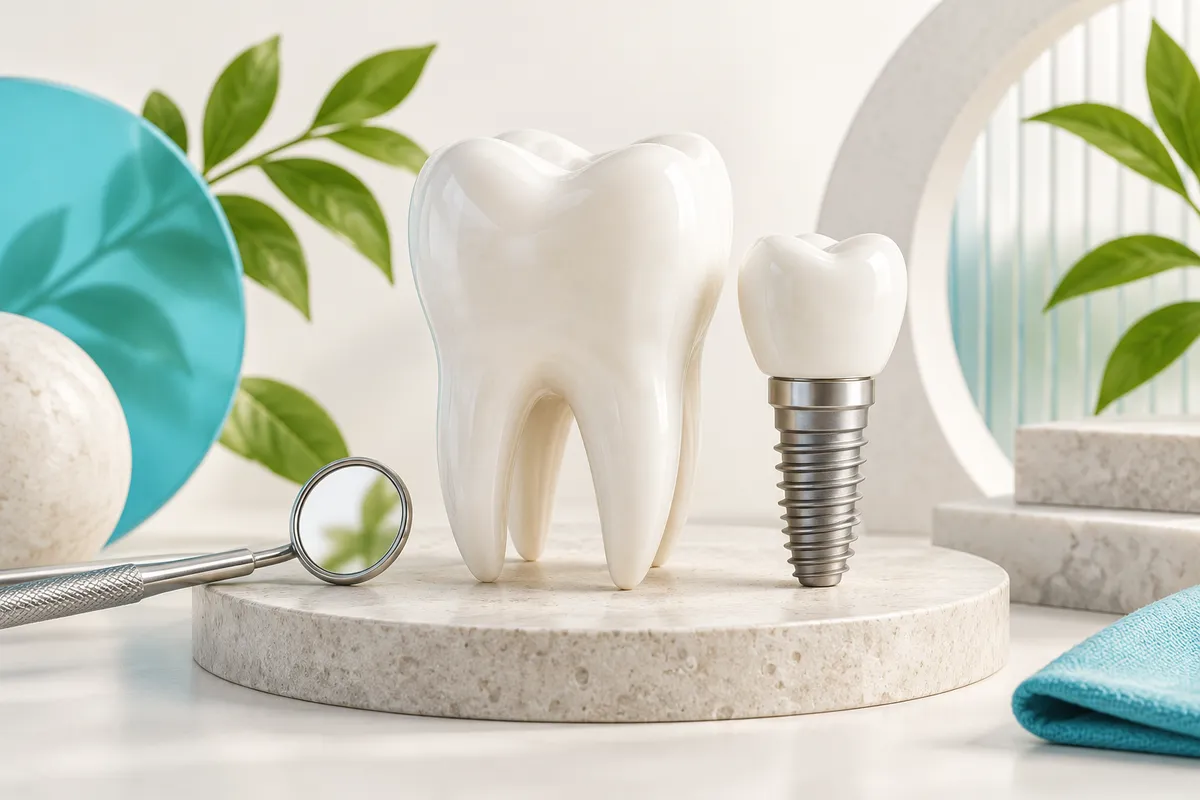
You do not need to decide the solution yourself. The value of the assessment is in connecting the recommendation to what the dentist finds. Ask which parts address health or function and which are elective appearance choices. That distinction can help you prioritise your budget without confusing urgency and preference.
Compare dental expertise, not a package name
If Syrian dental expertise is part of your reason for considering the destination, look for the clinician’s relevant experience and current professional authorisation. Ask who will design the plan, who will perform each stage and who will handle adjustments. If laboratory work is involved, ask how the proposed material and final fit will be documented.
Do not assume that every service advertised under “smile makeover” has the same scope. Ask how many teeth are included, why those teeth have been selected and what alternatives were considered. The explanation should make sense to you before you agree to a cosmetic change.
What should a cost comparison include?
Request an itemised dental proposal with tooth references where appropriate, the planned material, temporary work, laboratory stages and follow-up. Separate the cost of the agreed treatment from possible findings that could change it after examination. Ask how you would approve any revised plan.
- Confirm whether quoted amounts are per tooth, per stage or for the entire proposed treatment.
- Ask which reviews and adjustments are included and for how long.
- Check whether another visit to Syria may be necessary before arranging your return date.
- Record the currency, payment stages and cancellation terms in writing.
There is no verified universal price list or guaranteed saving on this page. A competitive proposal is one you can compare fairly, including travel and any later visit. Ask for the same scope when comparing countries so that differences in materials or included work remain visible.
Plan appointments around real availability
If a family visit brings you to Syria, tell the dentist how long you expect to be there. Avoid making the available holiday determine the clinical plan. Ask which stages can be scheduled, what remains provisional and how you would be contacted if a laboratory or review appointment changes.
Accommodation close to relatives may be convenient, but check the actual journey to the practice at the times you will attend. Keep written instructions and a record of the completed work for the dentist you usually see at home. Discuss responsibility for later adjustments before treatment starts.
Begin with a tooth-by-tooth explanation
A smile is seen as a whole, but a treatment proposal should explain what is recommended for individual teeth and why. Ask the dentist to show you the relevant areas using a chart, mirror or the records from your examination. A quotation listing a number of units is easier to interpret when those units correspond to identified teeth, rather than a broad promise to transform the entire smile.
You do not need to learn a dental numbering system before the consultation. Ask the clinician to connect any numbers in the written plan with the teeth you are discussing. This matters when two proposals appear to cover different numbers of teeth or when a revised plan adds an item. The question is not simply how many units you receive; it is which findings justify each proposed treatment and what alternatives were considered.
Create a record that separates the finding, recommendation and decision. For example, the dentist may identify an issue, explain options and recommend one, while you still need time to consider an elective change. Recording those stages separately prevents a preliminary discussion from being remembered as a final agreement. It also helps you see which part of a larger plan is intended to address your original concern.
| Item in your record | What to ask the dentist to explain |
|---|---|
| Tooth or area | Which part of the mouth is being discussed |
| Finding | What the examination or relevant investigation shows |
| Proposed care | What is recommended and its purpose |
| Alternatives | Other reasonable options and why they differ |
| Decision status | Agreed, under consideration or awaiting information |
If you have older restorations, ask whether the recommendation is to maintain, repair or replace them and what supports that choice. Do not assume that the age of dental work alone proves it must all be replaced. Equally, an absence of obvious pain does not allow you to judge its condition yourself. The assessment should provide the connection between the current findings and the proposed action.
Before leaving the consultation, read the plan back in ordinary language. If you cannot tell which teeth would be treated or why, ask for clarification. A clear explanation makes later discussions about cost, materials and appointments more useful because all parties are referring to the same work.
Separate health, function and appearance goals
Dental enquiries often contain several priorities at once. You may want a brighter colour, easier chewing and reassurance about an old restoration. These concerns deserve to be distinguished so that the proposed sequence makes sense. Ask the dentist which findings concern oral health, which concern function and which changes are elective preferences about appearance. A single marketing label does not explain the relationship between those categories.
Write your priorities in a short list before the visit. Describe the situations that matter: smiling in ordinary photographs, speaking comfortably, eating the foods you usually eat or cleaning around existing work. These descriptions help the clinician understand your goal without turning you into the person who must select the treatment. You can be specific about the desired change while remaining open to a different route than the one you initially imagined.
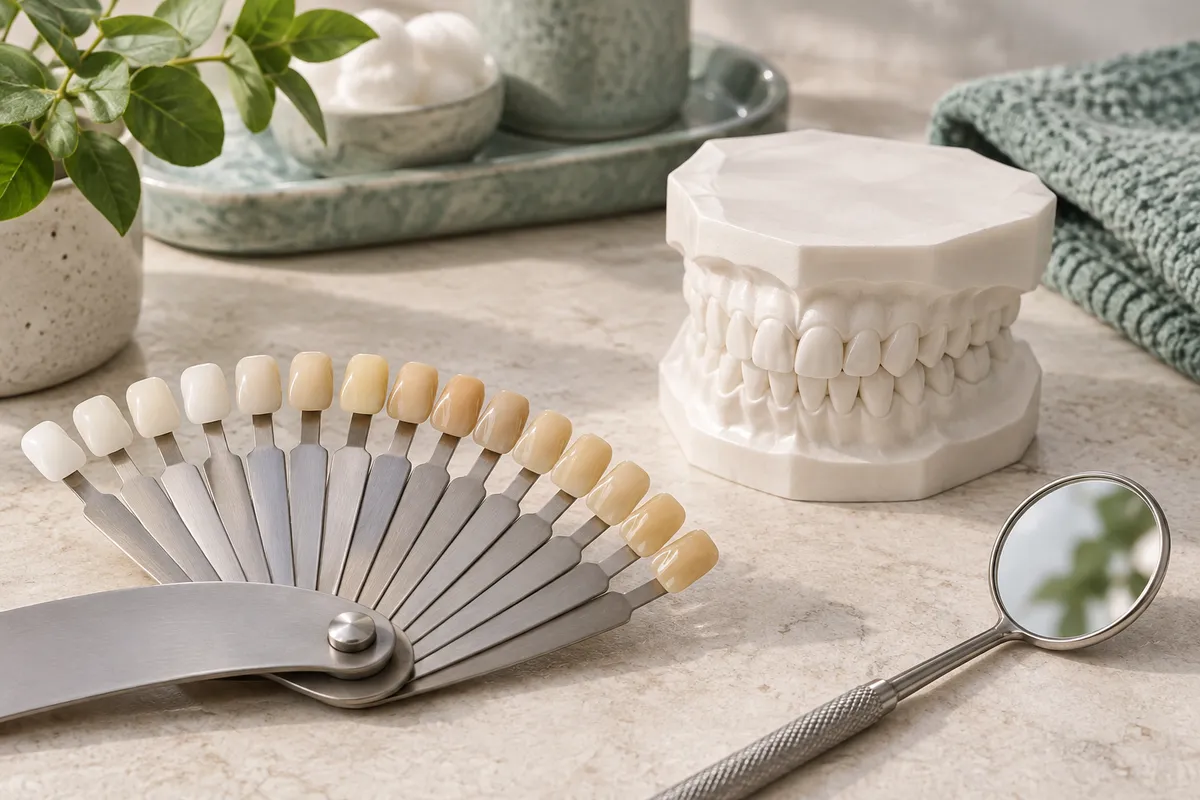
If the dentist recommends dealing with one issue before a cosmetic step, ask how the sequence affects the overall plan. Which decision can be made now, and which should wait for the response to earlier care? The answer may change the timing of laboratory work or the usefulness of an initial shade discussion. Do not assume that every component of a comprehensive proposal should begin on the same day merely because it appears in one document.
There can also be a difference between an outcome you would welcome and an outcome you require to feel satisfied. Tell the dentist when a particular feature is essential to you. If the realistic range does not match that expectation, it is better to understand the mismatch before an irreversible step. A consultation can be useful even when it shows that the treatment you first requested is not a good fit for your priorities.
Keep the three goal categories visible when comparing quotations. A proposal focused on appearance should not be assumed to address every functional concern, while a restoration intended to solve a structural problem may involve appearance choices that still need discussion. Clear goals help you ask the right question of each part of the plan and avoid choosing a large package simply because its name seems to cover everything.
Understand whitening before planning restorations
Whitening changes the colour of natural teeth; it does not lighten existing crowns, dentures or implant restorations. The NHS whitening guide also explains the need to assess teeth and gums and the possibility of sensitivity or gum discomfort. Those limits make an individual dental assessment important, particularly when your smile already includes several materials or different types of work.
Start the conversation with the colour change you would like, then ask which parts of your smile could respond to the proposed approach. If a visible restoration has a different shade, ask how that affects the options and sequence. Do not assume that one whitening treatment will make every visible surface match or that a new crown is automatically required whenever you want a brighter smile. The dentist should explain the relationship between the existing work and your goal.
Ask how the starting shade and the intended change will be discussed. A screen image can help communicate a preference, but display settings and lighting can change how a colour appears. You need an explanation of how the clinician will assess and communicate the result in practice. Avoid treating a photograph of someone else's teeth as a promise that your own teeth will reach an identical appearance.

If you receive instructions for a dentist-supplied home treatment, make sure they belong to the product and plan prescribed for you. Ask about anything you do not understand before using it. Do not increase use or combine products because an online comment claims that this produces a faster change. This guide does not supply a concentration, schedule or individual whitening protocol.
When comparing costs, establish whether the quotation concerns an assessment, a clinic procedure, a home system or a combination. Ask what reviews or adjustments to the plan are included and what would be charged separately. The word whitening can describe different service scopes, so the same heading on two quotations does not make them equivalent. A useful comparison follows the actual proposal and the dentist's explanation of its limits.
Discuss veneers as a treatment commitment
Veneers cover the front surfaces of teeth and differ from crowns that cover more of the tooth. The American Dental Association's veneer guidance explains that treatment involving enamel removal is irreversible, that existing dental problems need attention, and that veneers can later require repair or replacement. A cosmetic change should therefore be discussed as an ongoing treatment commitment rather than a temporary accessory.
Ask why veneers are being proposed for each tooth and what would happen to the existing tooth surface. The answer should be specific enough that you understand the intended change and the alternatives. A phrase such as “minimal preparation” needs explanation in your own case; it should not be read as a universal promise that every tooth will remain untouched. If the discussion uses a branded product name, return to the actual proposed preparation and restoration.
Compare the appearance decisions separately from the decision to undertake treatment. Shade, shape and the number of teeth involved may be discussed together, but agreeing that you like a digital image is not the same as understanding the clinical steps required to pursue it. Ask what the image can and cannot predict, how preferences will be checked and what opportunities for discussion exist before a permanent step.
| Veneer question | Why it belongs in the consultation |
|---|---|
| Why this tooth? | Connects the proposal to an individual finding or stated preference |
| What preparation is planned? | Clarifies the change to the natural tooth |
| What alternatives exist? | Makes the scope of the decision visible |
| How will shape and colour be discussed? | Separates preference from a guaranteed digital result |
| What later maintenance may be needed? | Extends the discussion beyond the fitting appointment |

If you are travelling to Syria, ask how a concern about fit or appearance would be assessed after you leave. Do not assume that every adjustment can be handled by a message or that the cost of a future replacement is automatically included. Keep the treatment description and written terms together. A clear account of maintenance and follow-up makes the initial decision more realistic, even when the main reason for seeking care is an aesthetic goal.
Ask why a crown is recommended
The ADA explanation of crowns describes uses including restoring damaged teeth and supporting or covering certain restorations. A crown may address a structural need, an appearance concern or both, depending on the assessment. Ask the dentist to explain the purpose for the particular tooth in your plan rather than assuming that every crown in a smile package has the same justification.
The first useful distinction is between the condition found and the restoration selected. Ask what the clinician is trying to preserve or restore, and what other approaches were considered. You do not need to challenge every recommendation to request an explanation. A plan that identifies the reason for each crown is easier to understand than a list containing only a material name and a per-unit price.
If the proposal includes several crowns, discuss how they relate to one another and to the rest of your mouth. Which decisions depend on earlier treatment? How will the intended bite, shape and appearance be assessed? These are questions about planning, not instructions for you to design the restorations. The dentist should explain which details are already known and which may be clarified during the agreed sequence.
Ask whether temporary work is planned and what its purpose and limitations are. Confirm the instructions that apply while you have it and whom to contact if there is a problem. Do not assume that a temporary restoration has the same role or expected duration as the final one. Equally, do not treat a problem with temporary work as something that must simply wait until your travel schedule allows another visit; seek the treating team's advice.
At the quotation stage, identify whether the stated price includes the related clinical visits, temporary restoration, laboratory work and planned review. If some items are separate, keep them visible. This makes comparisons between crown materials and providers more meaningful, because the commercial scope is no longer hidden behind the same short treatment name. The decision should remain connected to the assessed tooth and the full care arrangement.
Put implant planning on a realistic sequence

A dental implant is an anchor placed in the jaw to support a replacement tooth or teeth. The ADA implant guide describes placement, healing and restoration as connected phases, with timing varying between patients. Some plans require months between stages. That is why a promise about completing everything during one visit needs an individual explanation rather than being accepted as a general feature of treatment in a particular country.
Ask what the word implant includes in the quotation. Does it refer to the surgically placed component, the restoration attached to it or the whole proposed sequence? A short advertised price may not identify all the components or visits. Request a written description that makes the scope clear before comparing it with another proposal. Two identical-looking price labels can concern different portions of the work.
The clinician should explain what assessments are needed and whether additional steps are being considered in your case. Do not arrange imaging or select an implant system solely to match a package before that discussion. Your role is to understand the recommendation and its uncertainties, including which findings could change the timing, scope or cost. If an additional procedure is proposed, ask for its purpose and consent discussion rather than treating it as a routine commercial upgrade.
| Planning stage | Question for your proposal |
|---|---|
| Assessment | What information is needed to determine suitability? |
| Surgical stage | What is proposed and who performs it? |
| Interval between stages | What must be reviewed before progressing? |
| Replacement teeth | What restoration is planned and how is it included in the quote? |
| Continuing care | Who checks the result and what records will you receive? |
For a patient travelling to Syria, the possibility of more than one visit belongs in the original budget and schedule. Ask which dates are confirmed and which depend on clinical progress or laboratory work. A temporary arrangement should be described as temporary, with its own instructions and review plan. Understanding those distinctions can prevent a holiday-length assumption from becoming the hidden basis of a treatment decision.
Compare tooth replacement options without presuming one winner
A missing tooth can lead to discussion of an implant, bridge, removable replacement or other appropriate options depending on the assessment. The NHS dental-treatment overview describes these as different approaches, not interchangeable versions of the same product. Ask the dentist which options are reasonable for your situation and why. A recommendation should explain the relationship between your mouth, preferences and the proposed restoration.
Begin with what you want to improve: appearance in a particular area, comfort with an existing appliance, speaking, chewing or a concern about adjacent teeth. These goals help frame the comparison. They do not establish which option is clinically suitable, and a preference for a fixed solution should still be discussed alongside its implications. Tell the clinician what you would find difficult about any proposed routine or sequence so the practical burden is understood.

Avoid comparing only the first payment. Ask about the whole treatment sequence, maintenance, possible adjustments and the arrangements if a component needs attention later. If you already have a removable replacement, explain what works and what does not. The dentist can then distinguish dissatisfaction with one feature from a need to change the entire approach. A new solution should be evaluated against your actual concern rather than the appeal of a treatment name.
You can create a personal comparison with columns for the clinician's rationale, treatment stages, daily care, follow-up and stated cost. Leave unknown items blank and label them as questions. This is not a score that determines the best treatment; it is a record of the explanations you have received. If only one option has been discussed, ask whether alternatives were considered and what made them less appropriate.
If different clinicians recommend different solutions, make sure they are working from comparable information. A brief online exchange and a full examination may have different levels of certainty. Keep each opinion dated and attributed, and seek clarification of the substantive difference before deciding which proposal you prefer. The aim is a decision you can explain, including why you accept the trade-offs associated with the chosen route.
Consider orthodontics before treating alignment as a surface problem
Teeth that look uneven may raise questions about their position, shape, bite or a combination. Orthodontics moves teeth; it is not simply another name for covering their visible surfaces. The NHS braces guidance explains that treatment can address alignment and bite-related problems and requires review, with retainers after active treatment. Ask whether orthodontic assessment is relevant before assuming a restorative approach is the appropriate response to every irregularity.
Describe the change you want and ask how the recommended route addresses it. If you are offered a quick cosmetic transformation, clarify whether it changes tooth position or changes the visible shape through restorations. That distinction affects what you are agreeing to. You can prefer a particular timetable while still needing to understand the clinical differences between the options and the limits of what can be accomplished within that timetable.
If orthodontic treatment is discussed during a visit to Syria, continuing supervision becomes a central practical issue. Ask who would provide reviews, how adjustments would be organised and what would happen if you are living elsewhere during treatment. Do not assume that an appliance fitted during a short stay can be managed indefinitely without an agreed clinical arrangement. A plan that spans locations needs clear responsibilities, not simply a starting appointment.
Ask about the work required after the active phase. The retainer discussion should include individual instructions, review arrangements and what to do if there is a problem. This guide does not give a wearing schedule because that belongs to the treating orthodontist. Keep the prescribed instructions accessible and distinguish them from general information supplied by an appliance brand or another patient's experience.

When comparing costs, determine whether the offer covers assessment, the active treatment, reviews and retention, or only part of that sequence. Confirm how changes to the plan are explained. A lower initial payment can be difficult to interpret without those details. The most useful comparison is between complete, clinically explained arrangements that you can realistically follow, including the period after the most visible part of treatment has ended.
Give gum health a place in the treatment sequence
The gum assessment should not disappear behind a discussion of tooth colour or material. The NHS gum-disease guide identifies bleeding, swelling and soreness as reasons to seek dental assessment and explains that treatment depends on severity. Tell the dentist about symptoms you have noticed, even if your enquiry began with a cosmetic goal. Do not decide from a photograph that the gums are ready for the proposed work.
Ask how the findings affect the sequence of care. Does the clinician recommend addressing a gum issue first? What will be reviewed before moving to the next stage? The explanation should connect the timing to the assessment rather than present a delay as an unexplained obstacle. A proposed smile change may still be worth discussing, while the appropriate order of treatment differs from the order suggested by a package advertisement.
If you have already received gum treatment, bring the relevant records and describe the follow-up you currently receive. Distinguish professional findings from your own impression that the situation is better or worse. The dentist may need more information before comparing earlier and current assessments. Keep missing details labelled as missing rather than replacing them with a broad statement that the condition was “fully treated.”
Discuss the practical routine that would accompany the plan. Ask for individual instructions you can follow around existing or proposed restorations and clarify anything you find difficult. The purpose is not to buy an extensive collection of products because they appear in a promotional bundle. It is to understand the care the clinician recommends and how it relates to the treatment being considered.
Where the proposal involves several appointments, record the aim of each: assessment, treatment, reassessment or restorative planning. This makes the timeline easier to understand and prevents a provisional date for final work from being treated as unconditional. A well-explained sequence gives you a stronger basis for arranging a visit to Syria and deciding what can reasonably be planned before the clinical picture is clearer.
Understand root canal treatment within a wider plan
Root canal treatment addresses infection inside a tooth; it is not simply an optional cosmetic addition. The NHS root-canal guide describes cleaning and filling the internal system and notes that treatment may involve multiple appointments and a later restoration. Ask why it is being recommended for the identified tooth, what alternatives apply and how it connects to any crown or other work in your proposal.

If a quotation contains both root canal treatment and a crown, ask whether the prices represent separate stages and what each includes. A single combined line can be difficult to compare with another quotation that separates them. You need to understand the clinical sequence before comparing the commercial totals. The number of appointments and the status of any temporary restoration should also be explained rather than inferred from the final treatment name.
Tell the dentist about previous treatment on the same tooth and provide records if available. If another clinician has recommended extraction instead, identify the opinion and the information on which it was based. A difference between recommendations deserves clarification; it does not automatically establish that one clinician is wrong. An appropriate specialist opinion may be useful when the issue requires expertise beyond the initial discussion.
Ask what would happen if the plan changes after assessment or during an agreed stage. Which decisions would be discussed with you, and how would the written scope and cost be updated? Keep this separate from an assumption that every possible finding has already been included in a preliminary estimate. A clear process for explaining change can be more useful than a promise that no change will ever occur.
If your available time in Syria is short, say so without turning the return date into a requirement to complete an unsuitable sequence. The dentist should explain which stages can be planned and what continuity is needed. You can then decide whether the proposed timing fits your circumstances, instead of discovering after the first appointment that the rest of the care was never covered by the travel plan.
Keep urgent symptoms separate from elective travel planning
A planned dental visit abroad is not a reason to postpone urgent care where you are. The NHS dental-abscess guidance states that a suspected abscess needs urgent dental treatment and does not resolve on its own. Difficulty breathing or swallowing, major mouth swelling or eye involvement requires emergency assessment. Use the appropriate local urgent or emergency service; do not wait for a routine enquiry reply or a future flight to Syria.
This distinction matters because a conversation about an elective smile change may occur while a separate symptom develops. Tell the relevant clinician about the new issue, but do not assume that an administrative appointment contact can determine its urgency. A photograph sent through a booking channel may not be reviewed promptly or by someone able to assess the problem. The route for urgent care should be appropriate to your location and symptoms.
When the immediate issue has been assessed, ask how it affects the elective plan. The clinical sequence may need review, and existing quotations may no longer describe the same situation. Keep the new findings and instructions available to the dentist who will discuss further treatment. Do not merge the urgent visit and the cosmetic proposal into one assumed plan without confirming who is responsible for each part.
Avoid selecting an antibiotic or other medicine from an online treatment story. The appropriate treatment depends on clinical assessment, and a temporary reduction in symptoms does not establish that the underlying issue has been resolved. This guide gives no individual drug regimen. Its purpose is to keep a time-sensitive health question from being handled as though it were simply another item in travel coordination.
For routine planning, ask each provider which contact route is intended for booking questions and which is intended for clinical concerns. Keep that distinction visible in your notes. It will not replace local emergency care, but it can prevent confusion when you need to communicate a non-emergency change or clarify an instruction before continuing with a scheduled stage.
Discuss comfort and dental anxiety before the appointment
If previous dental experiences make you anxious, tell the clinician what part is difficult for you. It might be uncertainty about what will happen, discomfort with a particular sensation, difficulty asking for a pause or concern about a previous reaction. Specific information gives the conversation a practical starting point. You do not have to minimise the concern in order to be taken seriously or to make the appointment easier for someone else.
Ask how the dentist will explain each stage and how you can signal a need to stop or ask a question. If any sedation or additional comfort measure is proposed, request the individual explanation, relevant assessment and instructions. Do not assume that it is included merely because the advertisement uses words such as relaxed or painless. Those words do not describe the clinical plan, supervision or arrangements after the visit.
When language is a concern, agree how important instructions and consent discussions will be understood. A person who can assist with directions may not be the right person to translate a detailed clinical explanation. Ask what support is available and whether you will have an opportunity to speak privately. The aim is an appointment where you can understand and participate, not simply remain quiet while others complete the conversation around you.
You can prepare a short note describing your concern and the approach you would find helpful. For example, you might ask to hear a brief explanation before a step begins or to confirm a signal for a pause. These are preferences to discuss, not guarantees that every requested arrangement is possible. Confirm what has actually been agreed so that your expectations and the team's understanding match.
After the appointment, record any instruction you need clarified and whom to contact. If anxiety affected your ability to remember the explanation, say so and ask for it again in a usable format. A sound decision depends on your understanding. It should not rely on the assumption that because the explanation was spoken once, every part of it was necessarily understood and retained.
Compare restorative materials through the intended use
Material names can dominate cosmetic dental advertising, but a material label alone does not explain why a restoration is appropriate. Ask which material the dentist proposes for which tooth and what role it serves in the assessed plan. Avoid a universal ranking that makes one name sound best for every location, design and patient. The useful discussion concerns the recommendation for your mouth and the trade-offs the clinician considers relevant.
Request a distinction between the material category, the named product where applicable and the actual restoration being made. These are related but different details. If a quotation uses a broad phrase such as premium ceramic, ask what will appear in the treatment record and how the proposed specification is confirmed. You do not need to choose a laboratory product yourself to request an understandable description of what is being supplied.
Appearance should be discussed alongside the other goals of the restoration. Ask how shade, shape and the relationship with neighbouring teeth will be evaluated. A material sample viewed in isolation cannot show the complete result in your mouth. The clinician should explain what can be assessed at the planning stage and what depends on later clinical and laboratory steps.
| Material discussion | Question that makes it more useful |
|---|---|
| Name | What exactly is proposed in the written plan? |
| Purpose | Why is it recommended for this tooth and restoration? |
| Appearance | How will colour and shape be evaluated in context? |
| Documentation | What specification will be recorded after treatment? |
| Later care | What should I know about review, repair or replacement discussions? |
When comparing prices, keep differences in specification visible rather than assuming they explain every difference in quality. The clinician, preparation, design, laboratory process and follow-up also form part of the service you are considering. A more expensive material name is not an independent guarantee of an appropriate treatment plan. Conversely, a lower price is not enough information to conclude that the proposed care is equivalent.
Know where the laboratory fits into your appointments
Some restorative work involves a dental laboratory, so the schedule may depend on more than the time you spend in the dental chair. Ask which parts of your proposal require laboratory work and what information is sent to support it. You do not need a technical manufacturing lesson, but you should understand the sequence well enough to distinguish a clinical appointment from the period during which a restoration is being prepared.

Confirm what happens when a fit, shade or design needs review. Is another clinical appointment required? Which date remains provisional until the dentist has evaluated the work? A travel itinerary that leaves no room for the agreed assessment can put unnecessary pressure on a decision. Ask the provider to explain realistic dependencies rather than treating a laboratory turnaround estimate as a guarantee that no change will be needed.
The dentist remains your point of discussion for the clinical recommendation and fit. If you are introduced to a laboratory professional for a particular task, clarify that person's role. A conversation about a shade or shape should not leave you uncertain about who approves the final clinical plan. Keep preferences and clinical decisions connected through the responsible dentist so that different people are not working from inconsistent versions of what you want.
Ask how the proposed work will be documented in your records. This may be useful if another dentist later needs to understand the restoration or if you return for a review. A photograph of the finished smile is not the same as a record of what was provided. Confirm which information you will receive rather than assuming that every technical detail will automatically appear on a payment receipt.
If a schedule changes, request a clear update identifying the affected appointment and the reason that can be explained to you. Then revise the practical arrangements that depend on it. There is a difference between an inconvenience in scheduling and a reason to skip a necessary clinical check; the plan should allow you to understand that difference without being pushed to accept work simply because a departure date is approaching.
Understand the role of temporary restorations
The word temporary describes a stage of care, not a complete set of instructions. If temporary work forms part of your plan, ask what it is intended to do, how long it is expected to remain in place and what review is agreed. The dentist should explain the individual care instructions and the contact route if it becomes uncomfortable, loose or otherwise concerning. Do not assume that guidance for another patient's temporary restoration applies to yours.
Clarify the relationship between the temporary stage and the final restoration. Which features are being evaluated at that point, and which are not intended to represent the final result? Without that explanation, it is easy to judge a provisional stage against expectations that belong to a later one. It is also possible to overlook a concern because you believe everything temporary must simply be tolerated. Ask the treating team rather than deciding either way yourself.

If you will travel while temporary work is in place, that circumstance should be discussed before the stage begins. Ask how the next appointment is arranged, what records you should keep and which local-care arrangements would apply if needed. Do not treat the temporary stage as a convenient way to fit any treatment plan into any length of holiday. Its appropriateness and timing belong to the clinical discussion.
Keep the cost of temporary work visible in the quotation, along with the stated reviews. If it is included in a broader package, ask what that inclusion actually covers. An unexpected need for an additional visit may have different terms from a scheduled review. Understanding those terms early helps you compare the whole care sequence rather than only the price of the final restoration.
At each transition, confirm what was completed and what remains. A clear record might distinguish temporary placement, assessment of a concern and the planned final fitting. This makes it easier for you and any subsequent dentist to understand the current stage without relying on a short phrase such as “the smile work is done” when part of the agreed treatment is still outstanding.
Use digital smile images as a discussion aid
A digital image can help you explain preferences about tooth shape, colour or the overall appearance of the smile. It should be accompanied by an explanation of what the image represents. Ask whether it is an initial visual concept, a record used in treatment planning or another type of presentation. Do not assume that every attractive preview has the same clinical basis or predicts an identical final result.
When discussing a proposed image, identify what you like in concrete terms. You may prefer a softer contour, a less uniform appearance or a different balance between visible teeth. Those comments are more informative than asking to look exactly like another person. The dentist can then explain what is relevant to your assessment and what limits or alternatives should be considered before translating a preference into treatment.
Keep the distinction between visual approval and treatment consent clear. Saying that you like a picture does not answer the questions about tooth preparation, materials, risks, maintenance and alternatives. Those require their own discussion. If you change your preference after seeing another version, ask how that affects the plan and whether any clinical or laboratory step has already been agreed or completed.
| What the image helps with | What still needs a separate explanation |
|---|---|
| Describing a preferred appearance | Whether the proposed care is clinically appropriate |
| Comparing visual options | The changes required to natural teeth |
| Communicating with the team | The limits of predicting a final result |
| Recording a preference | The scope of consent and any later change |

Save the version that was actually discussed with its date if the provider supplies it, and keep it alongside the written plan rather than using it as the whole plan. If an image is only promotional or belongs to someone else, label it as a reference. Clear context allows images to improve communication without turning them into an outcome guarantee or a substitute for examining your teeth and bite.
Include bite, speech and daily use in the conversation
An appearance-focused enquiry can still involve practical questions about how you speak, chew and care for your teeth. Tell the dentist about the situations that matter to you and any concerns with your existing bite or restorations. Do not assume that these are secondary simply because the service was advertised as cosmetic. They are part of the assessment and of understanding what the proposed work is intended to achieve.
Ask how the dentist will evaluate the restorations in use, not only in a still photograph. Which checks are part of the fitting and review process? What should you report if something does not feel right afterwards? A clear answer helps you distinguish a question that should be raised promptly from an assumption that you must simply adapt. The appropriate response to a concern belongs to the treating clinician, not to a general online timetable.
Your usual activities can provide helpful context. If speaking is central to your work, explain that. If you have difficulty cleaning around existing work, describe where and what you have already tried under dental advice. These details do not determine the treatment on their own, but they can help the clinician explain the practical implications of the proposal and the instructions you will need.
Before travelling home, ask which reviews are planned and what information should be recorded about the completed work. If a concern remains unresolved, do not mark the treatment complete in your own notes merely because all payments or travel bookings are settled. Clinical completion, administrative completion and your understanding of ongoing care are related but distinct matters.
A useful final conversation returns to the goals identified at the beginning. What has been addressed, what needs continued care and what should be reviewed later? That discussion makes the outcome more understandable than a final photograph alone. It also gives you a clearer basis for communicating with your regular dentist, especially when the proposed work was carried out during a visit away from your usual place of residence.
Identify the dentist responsible for the complete plan
A complex dental proposal may involve different areas of expertise. Ask who coordinates the overall plan and which clinician performs each component. If an assessment, an implant stage and a restoration are handled by different people, you should understand how their recommendations fit together. A collection of appointments is not automatically a coordinated plan, even when they are arranged through one contact.

The General Dental Council's advice on treatment abroad encourages assessment by a qualified dentist, discussion of medical history and understanding aftercare and responsibilities. Its regulatory statements concern the UK; they do not establish Syrian licensing rules or verify any Syrian provider. For your own care, identify the relevant professional and request current, applicable evidence of authorisation and competence.
Focus experience questions on the proposed work. General years in dentistry do not describe experience with every procedure or combination of treatments. Ask how the clinician would explain a plan like yours, including the reasons to use a particular approach and the limits of what it can achieve. A professional who can discuss alternatives and uncertainty gives you more useful information than a broad claim of being the best.
Where a second specialist is involved, ask whether that person has reviewed your case or is only a possible referral. Keep the distinction visible in the written sequence. An anticipated consultation should not be presented as though the specialist has already approved the whole plan. The same applies when a laboratory or another practice is mentioned: name the role and confirm the stage at which their contribution is actually agreed.
Before making a commitment, check that you can answer three questions in plain language: who is treating me, who is coordinating the plan and who will review a problem? If one answer is missing, ask for it. These details make the Syrian expertise you are considering specific to your care rather than a general impression attached to a country, clinic name or advertising campaign.
Read a dental quotation in three passes
On the first reading, identify the clinical scope. Which teeth or areas are included, which procedures are proposed and which items remain dependent on examination? Do not begin by adding totals if you cannot yet tell what the quotation describes. A precise-looking amount can conceal an ambiguous scope, and comparing it with another amount will not resolve that ambiguity.
On the second reading, identify how the price is organised. Is it per tooth, per implant component, per visit or for a defined course of care? Mark temporary work, laboratory stages, reviews and any optional additions. If an item is described as included, note the relevant limits. If it is not mentioned, label it unknown rather than assuming either that it is free or that it will definitely be needed.
On the third reading, look at the practical terms: currency, payment stages, date of the estimate and the process for approving a revised plan. Keep these terms attached to the clinical proposal they describe. A price from one version should not be carried into a different treatment scope without confirmation. If a provider sends an updated document, retain the earlier version but identify which one is current.
| Reading pass | Your main question | Useful output |
|---|---|---|
| Scope | What care does this document actually describe? | Identified teeth, procedures and uncertainties |
| Price structure | What is included in each stated amount? | Comparable units and visible exclusions |
| Terms | When and under what conditions does the offer apply? | Dated proposal and change process |
This method is particularly useful when the quote arrives in a short message. Ask for clarification in a durable written form rather than relying on a series of voice notes that are difficult to compare. The aim is not to make the paperwork elaborate. It is to ensure that the amount, the treatment and the responsibilities remain connected when you review the decision later.
A fictional per-tooth price comparison
The following example uses invented units for arithmetic only. It is not a price list for Syria, an offer from Cureista or a recommendation to treat a particular number of teeth. Imagine that Proposal A lists four restorations at 250 units each, while Proposal B lists the same stated number at 280 units each. The initial totals are therefore 1,000 and 1,120 units, but the comparison is not finished.
Suppose A separately lists a temporary stage at 100 units and a review package at 60 units, while B includes those two items in its stated total. Under these fictional assumptions, A becomes 1,160 units and B remains 1,120. The lower per-tooth price no longer gives the lower total for these listed items. Nothing in the arithmetic tells us whether the materials, assessment or treatment are clinically equivalent.
| Fictional item | Proposal A | Proposal B |
|---|---|---|
| Four stated restorations | 1000 units | 1120 units |
| Temporary stage | 100 units extra | Included |
| Listed review arrangement | 60 units extra | Included |
| Total of these items | 1160 units | 1120 units |
Now change one assumption: B recommends a different restoration for one tooth. You can still add the numbers, but you cannot claim that you are comparing the same treatment. The clinical difference needs explanation before the financial difference can guide a decision. Likewise, if either quotation is based on photographs alone, its provisional status must remain visible rather than being erased by a neat total.
Use this worksheet with actual written figures only after you understand their scope. Add travel or additional visits separately if relevant to you. Do not insert a guessed price for an unknown treatment merely to complete the table. An honest blank with a clear question is more useful than a false total. The example shows how to compare terms, not how to determine which teeth need treatment or which provider should be chosen.
Think beyond the initial fitting cost

The initial fee is one part of the financial commitment associated with dental work. Ask about planned reviews, maintenance instructions and the terms that apply if a restoration needs attention later. This does not mean every possible future cost can be predicted. It means you should understand which services are included now, which are conditional and which would be assessed and charged separately.
Avoid interpreting a long guarantee as proof that nothing can go wrong. Read what it covers, what it excludes and what the provider asks you to do to obtain an assessment. Does it concern a specific component, the provider's clinical work or another defined service? Is a return visit required? A warranty statement and an individual clinical prognosis are different kinds of information and should not be merged into a promise of a permanent result.
For someone living abroad, the practical cost of obtaining a review can matter as much as the wording of an included service. A provider may describe an appointment as included while transport and accommodation remain your responsibility. Ask about those distinctions before counting the whole follow-up process as free. If you have family accommodation, record that as your own arrangement rather than a service supplied by the dental provider.
You can create a future-care column alongside the initial budget. Include confirmed planned reviews, questions about additional visits and the contact process for an assessment. Keep unknown costs labelled. Do not turn hypothetical complications into a list of expected expenses, but do not hide uncertainty either. The column should help you identify the questions that would make the plan more workable for your circumstances.
When comparing Syria with another destination, use this broader scope consistently. A difference in the first invoice can be meaningful, but it is not the whole comparison when the treatment sequence and later access to care differ. Competitive value is strongest when the proposal is both clinically explained and practically understandable over the period in which you will use and maintain the dental work.
Stage a larger plan around clinical priorities
A comprehensive proposal can feel overwhelming when it arrives as a long list of procedures. Ask the dentist to explain the sequence and the purpose of each stage. Which care addresses an immediate clinical issue? Which decisions depend on a response to earlier treatment? Which appearance choices are elective? This discussion helps you understand the plan without assuming that every listed item has the same urgency or should be performed together.
If budget or travel availability is limited, state that clearly. Ask the clinician what options can reasonably be discussed within those constraints and what the consequences of postponing a stage would be. Do not redesign the clinical sequence yourself by deleting the most expensive line from the quotation. The items may be related in ways that are not obvious from their names, and the dentist should explain those relationships.

Record each stage with an entry condition and an intended outcome. For instance, an assessment may need to be completed before a restorative decision can be confirmed. A later review may determine whether a proposed next step still makes sense. This is a planning framework, not a treatment algorithm. The clinician decides the clinical conditions; your record makes them easier to follow when arranging appointments and comparing updated proposals.
Ask how a stage is considered complete and what documentation you receive. If a temporary arrangement remains in place, the record should say so. If you decide not to continue with elective work, ask what ongoing care applies to what has already been completed. Stopping a planned sequence is a clinical conversation, not only a cancellation message to the booking contact.
The benefit of staging is clarity, not an assumption that every treatment can safely be divided in any way you prefer. A realistic discussion may show that a different timetable or destination fits your needs better. It may also show that the original proposal is manageable once its dependencies are understood. In either case, you should be able to explain why the next stage comes next.
Arrange travel around confirmed clinical milestones
For dental care in Syria, a visit may include assessment, laboratory-related appointments, fitting and review. Some dates may be confirmed while others depend on findings or progress. Ask the practice to identify those distinctions before you finalise a travel schedule. A list of possible appointments is not the same as a promise that every stage will be completed within your preferred stay.
If you are staying with relatives, confirm the practical journey to the practice and the help you actually expect. Family familiarity with an area can be valuable, but it does not establish appointment availability or shorten a clinical interval. Keep social visits adjustable around the care that is agreed, and avoid treating a family event as a deadline that determines which treatment must be chosen.
Check travel and accommodation terms with their respective providers. The dental team can explain its appointment arrangements, but it may not be responsible for a booking you make independently. Record who confirms each item and how changes are communicated. If the treatment plan changes, update the dependent practical arrangements rather than assuming that one message automatically reaches everyone involved.
For a plan involving a possible second trip, discuss that possibility in the original decision. Ask what would determine the timing and what parts of the treatment or cost are connected to it. A second visit is not simply another line in a travel budget if it is necessary to complete or assess the care. You need to know whether you can realistically make that commitment before beginning.

The current guide does not verify entry permission, transport routes, payment acceptance or hotel availability for a particular traveller. Those details depend on your circumstances and date of travel and require current confirmation. Keep that practical verification separate from the clinical assessment so that neither a convenient journey nor an attractive appointment date is mistaken for confirmation that the whole plan is suitable and ready.
Keep a dental handover file for your usual clinician
If you normally receive dental care elsewhere, ask what information will help your regular dentist understand treatment completed during a visit to Syria. A useful handover is based on actual records, not only on your recollection of the package name. Confirm which documents the treating team supplies and how you can request clarification if a later clinician needs to understand a detail.
Separate the proposed plan from the record of completed work. A quotation may list procedures that were considered but not performed, while a revised plan may contain changes made after examination. Keep each document dated and labelled. This distinction helps prevent a subsequent clinician from assuming that every item in the original proposal was completed or that a preliminary material choice was the final specification.
| Document type | What to keep clear |
|---|---|
| Assessment or recommendation | The findings and proposed options at that point |
| Agreed plan | The scope you decided to undertake |
| Completed-work record | What was actually performed and when |
| Individual instructions | Current care and review advice |
| Financial documents | Payments and terms, distinct from clinical records |
Keep translations distinguishable from original documents and identify any part that has not been professionally translated. If you do not understand a technical term, ask the treating dentist rather than substituting a familiar word that may mean something different. Accurate records are more valuable than a polished summary that quietly changes the clinical meaning.
When sharing information, use an appropriate agreed channel and identify the recipient. A relative helping with travel does not automatically need access to the entire dental file. The purpose of the handover is continuity of care. It should allow the next clinician to understand the current situation without relying on informal messages, edited photographs or a receipt that describes the work only as a smile package.
Seek a second opinion on the point that changes your decision
A second opinion is most useful when you can identify the unresolved issue. You might want to understand why several teeth are proposed for crowns, whether an orthodontic assessment is relevant or how a staged implant plan fits your circumstances. Asking a focused question helps the second clinician explain the substantive issue rather than simply produce another price list.
Provide the information requested for the new assessment, including the earlier proposal where appropriate. Distinguish the first clinician's documented findings from your own interpretation of them. If you disagree with a recommendation, describe the concern accurately without altering the record to make the disagreement appear stronger. The purpose is to improve your understanding, not to obtain a predetermined answer that matches your preferred treatment or budget.
Two opinions may differ because the clinicians have different information, place different weight on a trade-off or recommend different reasonable approaches. Ask what explains the difference. A short remote review should not be treated as equally conclusive as an examination simply because its answer is more reassuring. Keep the scope and limits of each opinion visible when you compare them.
If the decision involves an irreversible change, give yourself time to understand the alternatives and implications. A booking opportunity does not answer an unresolved clinical question. You can ask for a further explanation without treating the conversation as a confrontation. A useful professional response should clarify the rationale and limits, even where it cannot remove every uncertainty.
After reviewing the opinions, update your decision record: what became clearer, what remains uncertain and what next step you choose. The outcome may be to proceed, revise the plan or wait. None of those choices is automatically correct for every patient. The value lies in making a decision connected to your assessment, your priorities and a care arrangement you can realistically follow.
A fictional case of revising an initial smile request
Imagine a reader who asks about a brighter, more even smile before visiting relatives in Syria. They have several older restorations and have seen an advertisement quoting a single price for a set number of teeth. They assume that requesting the same package will produce the appearance they want. This is a fictional planning example, not a patient story or a suggested treatment plan.
The first useful change is to describe the concern without choosing the procedure. The reader writes that the visible colour differences bother them and that one area feels difficult to clean. They collect the records they already have and ask for an assessment. At this stage, they do not conclude that every older restoration must be replaced or that the same treatment should be applied to every tooth in the smile.
During the consultation, imagine that the dentist explains several findings and separates health-related care from elective appearance choices. The reader asks which teeth each recommendation concerns and how the sequence works. Instead of comparing the original package with the new proposal only by price, they first compare the scope. They discover that the advertisement did not answer the questions now relevant to their assessed situation.

The reader then asks about alternatives for the appearance concern and what each would change. They request clarification of the proposed material, any temporary stage and the opportunity to discuss shape and shade. They keep a digital image as a record of a preference, while recognising that it is not the whole clinical plan. The clinical explanation and the visual discussion remain connected but distinct.
Next comes the travel review. A laboratory-related appointment is provisional, so the reader does not treat the original return date as a promise that all work can be completed beforehand. They ask which milestone determines the next visit and what would happen if the schedule changes. Their relative can help with accommodation, but that assistance does not answer the clinical timing question or remove the need for an agreed review.
Finally, the reader compares the written scope with their priorities. They may choose a staged approach, seek another opinion or defer an elective part after the clinician explains the implications. The scenario has no promised smile result because its purpose is to show how a broad request becomes a more informed decision. The improvement is in the quality of the questions and the clarity of the plan, not in assuming that a larger or faster package must be better.
You can apply the same reasoning to a different concern, including a missing tooth or extensive older work. Begin with the assessed problem, understand the options and identify the commitments attached to each. The most useful proposal is one you can explain in your own words, including the parts still awaiting information, rather than one whose appeal depends on a photograph and a headline price alone.
Turn your dental enquiry into a useful next step
Begin with the part of your smile or dental function that you want to discuss, then add the question you most need answered. You might be comparing a specific recommendation, seeking assessment after older work or trying to understand which treatment category is relevant. This gives the conversation a clearer purpose than requesting the price of a large package before anyone knows which care is appropriate.
Mention the information already available to you and the practical context of a possible visit. Do not send a full medical or dental file through an unidentified channel simply to make an enquiry look complete. Agree the recipient and method for any documents that are requested. The local preview's form is disabled and does not receive personal details or confirm provider availability.
Use the Syria destination guide to consider the wider planning context. If you are comparing countries, the Turkey dental-treatment guide can help you frame parallel questions while keeping the actual proposals separate. A licence, professional claim or service arrangement from one country should never be assumed to apply to a different facility or provider in another.

The goal of the first conversation is a clear next action: an appropriate assessment, a request for specific information or clarification of an existing recommendation. You should understand what has been confirmed and what has not. Syrian dental expertise becomes meaningful when it is attached to the actual clinician and relevant work; competitive value becomes meaningful when the scope and responsibilities can be compared.
Keep your preferences present throughout that process. You can care deeply about appearance while asking careful questions about the changes proposed to your teeth. You can value an affordable plan while refusing to treat an unknown item as included. A considered decision brings those priorities together through an understandable clinical explanation, a realistic sequence and a follow-up arrangement that remains clear after the visit ends.
Questions patients often ask
Can I get a final cosmetic dental plan from photographs?
Ask what the photographs can establish and what still needs clinical assessment. Treat an initial conversation as preparation for a decision, not a substitute for the examination needed to confirm it.
Should I choose the lowest price per tooth?
First make sure the proposed work, materials, visits and aftercare match. A per-tooth figure without that information does not show the total commitment.
What can I prepare now?
Write your three main smile or function priorities and list previous dental work you want reviewed. Start your planning conversation, or return to medical tourism in Syria to consider the wider visit. Individual providers, appointments and costs require confirmation before booking.
How much does one dental implant in Syria cost?
The useful price is for a clearly described treatment, not just an item labelled implant. There is no verified Cureista Syria fee list on this page. Request a dated quotation for your assessed case, with currency and inclusions, rather than treating a price from another clinic or an old search result as your offer. A missing amount is a question to resolve, not a zero in your budget.
The FDA implant guide distinguishes the implant body, the abutment and the artificial tooth it supports. That distinction makes a price comparison more useful: ask which components and clinical stages each figure covers. A quotation for surgical placement and a quotation for a completed replacement may describe different work.
| Part of the proposed plan | What to request in the quotation | What remains case dependent |
|---|---|---|
| Assessment and investigations | Included appointments and separately charged records | What the dentist actually needs to examine |
| Implant placement | The named system and the scope of the procedure fee | Suitability and any additional proposed care |
| Abutment and restoration | Whether the connector and final tooth are included | The type and design of the restoration |
| Interim stages and reviews | Temporary work, review appointments and their fees | Whether the sequence changes after assessment |

Do not multiply a single implant advertisement by the number of missing teeth to estimate a complete jaw. Ask the dentist to identify the proposed supports and restoration first. Likewise, a country of manufacture does not tell you what a particular quote includes. Request the product identification, the clinical rationale and the itemised scope as separate pieces of information.
Can dental implants be completed in one visit?
Clarify whether the advertised visit means placement, an interim tooth or a final restoration. The FDA notes that implant healing can take months or longer. Ask for the sequence appropriate to your assessment before turning an advertisement into a travel deadline. Your booking calendar cannot establish eligibility for an accelerated plan.
Does whitening change the colour of existing crowns?
NHS whitening guidance explains that whitening lightens natural teeth, not crowns or other artificial replacements. Tell the dentist which work you already have before discussing a target shade. Ask how the colour plan affects your existing smile rather than assuming every visible surface will respond alike.
What should I ask Cureista about dental prices in Syria?
Start with one goal and any recommendation you already want explained. For example: “I want to understand whether this quote covers the completed replacement and its reviews.” Add your preferred city if you have one, and ask where the assessment and treatment would take place. This does not presume a Cureista clinic in a specific city. Use the consultation questions to prepare a focused conversation, then discuss your priorities.
Detailed questions before choosing your treatment plan
How do I compare a zirconia crown price in Syria with a full smile quotation?
List the teeth, restoration type, material and laboratory work included in each proposal. A single-crown price and a multi-tooth smile quotation refer to different scopes. Ask which teeth need treatment and which proposed changes are elective. Compare only after the dentist explains those distinctions, then keep the appointment sequence alongside the itemised estimate.
Can dental implants in Syria be planned around one short visit?
Ask the dentist to separate assessment, any proposed procedure, restoration stages and reviews in the written schedule. The NHS dental treatment overview notes that replacement parts need preparation and may not be available at the first visit. Your own sequence must be confirmed for your case; do not infer it from a general promise about fast dental tourism.
What records should I request after dental treatment in Syria?
Ask for an account of the teeth treated, work completed and materials or implant details relevant to later care. Establish how to obtain the record if another dentist needs clarification. A payment receipt alone may not describe the clinical work. Discuss continuing review before departure so the next practitioner can understand the completed plan rather than reconstructing it from messages.
Items to record when comparing proposals:
- Teeth and restoration type
- Implant components
- Laboratory stages

Background for this discussion: NHS · Dental treatments. FDA · Dental implants. These general references do not verify a local provider’s credentials.
Prepare your next step with Cureista using Cosmetic dentistry in Syria and Questions to ask before cosmetic dental treatment in Syria.
Sources and context
References inform this guide. They do not establish a partnership with Cureista or replace an individual clinical assessment.