
On this page
A Hollywood smile, veneers and crowns are not interchangeable shopping choices. If you are considering cosmetic dentistry in Syria, begin with the change you want and ask what each proposed treatment would involve for your teeth. Cureista can help you organise questions about the extent of treatment, appearance, fees and appointments before you choose a package.
| Your immediate question | Where to look in this guide |
|---|---|
| Veneers or crowns: what is being offered? | Translate the smile-package label |
| What do EMAX or zirconia prices cover? | Compare the treatment and billing unit |
| Can I approve the result from a digital picture? | Understand the design preview |
| What do I need before booking? | Prepare your treatment discussion |
Describe the change without prescribing the treatment
Try describing the feature that catches your attention instead of naming the procedure you think will fix it. For example, you might say that one front tooth appears darker in photographs, that an edge looks uneven when you speak, or that an old restoration no longer blends with its neighbours. These descriptions give the dentist something specific to assess. Asking immediately for a full set of crowns may obscure the smaller concern that originally motivated you.
Use ordinary situations as context. Is the issue visible in a relaxed smile, only in a close photograph or mainly when you see yourself under a particular light? You do not need to create a diagnostic photo collection. Explain what you notice and let the dentist decide which examination or records are appropriate. A concern can be important to you even if it is subtle; the purpose is to understand it without enlarging the treatment scope by assumption.
Separate what you would like to change from what you would prefer to keep. Some people want their teeth to look brighter while retaining individual character. Others are concerned about one asymmetry but like the general shape. Put these preferences into the brief. A successful planning conversation should not treat every visible difference as a defect that needs correction or presume that a uniform result is everyone's goal.
Finally, state how important the change is compared with cost, time, maintenance and the extent of treatment. There may be tradeoffs to discuss. Naming them early allows the dentist to explain reasonable options rather than presenting a design that looks attractive but conflicts with your priorities once you understand what achieving it involves.
Sort colour, shape and position into different questions
The word makeover can hide several distinct requests. A colour concern, a question about tooth shape and a concern about alignment may require different assessments. Begin by sorting your observations rather than assuming a single package addresses them all. The dentist can then explain where the concerns overlap and where a separate decision is needed. This is a planning aid, not a method for diagnosing your teeth from a mirror.
| What you notice | The question to take into assessment |
|---|---|
| A darker appearance | What explains the colour and what options are appropriate? |
| An uneven edge | Is the concern about shape, wear, damage or position? |
| A visible gap | What accounts for it and which approaches should be compared? |
| An old restoration stands out | What is its condition and how does it affect the wider plan? |
| The smile feels unfamiliar | Which particular feature do you want the dentist to evaluate? |
Avoid turning the categories into a shopping list. Identifying four observations does not mean you need four treatments. Some may share an explanation, some may need monitoring and some may be preferences you decide not to pursue after discussing the tradeoffs. A useful plan gives each recommendation a reason instead of treating every observation as an instruction to add another item to a bill.
Return to the categories when reviewing a proposal. Can you connect each recommended intervention to a finding or a preference you discussed? If a new treatment appears, ask why it has been added. This keeps the plan understandable as it becomes more detailed and helps prevent the original aesthetic goal from being lost inside a broad package name.
Ask for a tooth map before comparing a smile package
A written tooth map can make a multi-tooth proposal easier to understand. Ask the dentist to identify the teeth involved and the recommendation for each, using the numbering system they normally use and an explanation you can follow. You should not have to infer the intended teeth from the total number of units in a quotation. A map also helps distinguish treatment for an existing problem from a change proposed primarily for appearance.
If two dentists recommend different numbers of restorations, compare the maps and the reasoning. Do not assume that the larger number is more complete or the smaller number is automatically more conservative. Ask what each proposal is trying to achieve, what findings support it and what would remain unchanged. The comparison concerns the clinical rationale and your goals, not a competition over how many teeth can be included in a discounted package.
Keep the map linked to a dated plan. If assessment changes a recommendation, ask for the revised version and an explanation of the affected teeth. It is easy to retain an old price while mentally accepting a new scope, especially when several messages discuss possible options. A clear record prevents that mismatch and helps you see exactly which decision remains open.
The map is also useful after treatment, but it does not replace the completed clinical record. The treating team should document what was actually performed. Preserve that information for a future dentist rather than filling in the final details yourself from the initial proposal or from what you remember being discussed during the design stage.
Define a shade preference in a real conversation
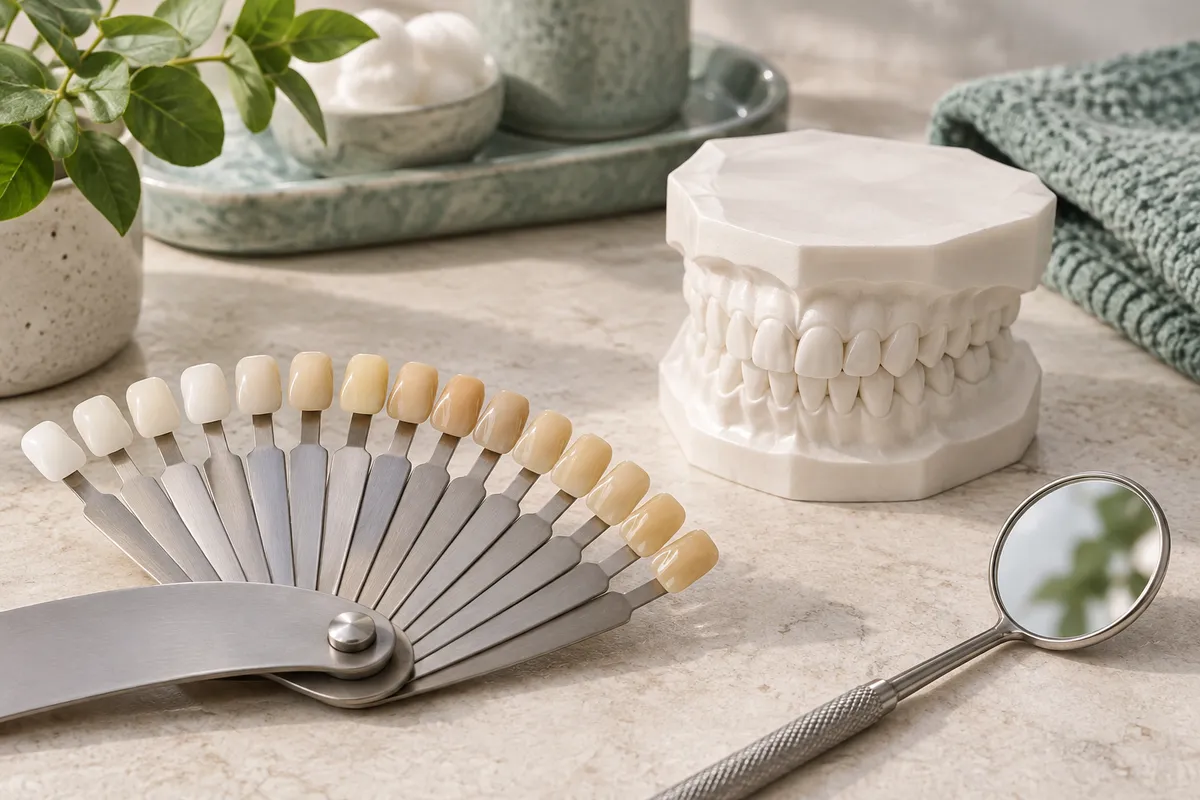
Words such as white, natural and bright mean different things to different people. Before approving an aesthetic plan, ask how the dentist will discuss colour with you and what reference will be recorded. A number from an online image may not capture the appearance you want in person. Your preference matters, but it should be discussed through a method the clinician can explain rather than assumed from a broad adjective.
Describe examples carefully. A photograph can help you point out a quality you like, but it may have different lighting, editing or camera settings. Use it to explain a preference, not as a guaranteed target that must be reproduced exactly. Ask the dentist to distinguish the conversation about appearance from the clinical question of what can reasonably be achieved in your circumstances.
Consider the context in which you want to judge the proposal. Would you like to see the planned shade alongside teeth that will remain untreated? Do you want time to think about a sample or demonstration before deciding? Ask what the service can offer and at which stage the decision is recorded. Do not assume that every digital preview or temporary stage provides the same opportunity for assessment.
If your preference changes, communicate it before the team reaches the relevant treatment stage. Ask what can still be revised and whether the scope or cost would change. This makes the discussion practical: the aim is to agree a clear aesthetic direction without treating colour selection as an unlimited series of changes that nobody has defined in advance.
Include existing restorations in the colour discussion
Whitening acts on natural teeth rather than changing the colour of existing crowns or similar restorations, according to NHS guidance. Tell the dentist about previous work before comparing an overall colour plan. The question is how the different parts of your smile will be assessed together, not whether one product can be assumed to change everything uniformly.
Point out the restoration that concerns you and bring any available treatment information if requested. You may not know its exact material or age; identify that uncertainty rather than guessing. The dentist can assess the relevant features and explain whether the concern is primarily appearance, condition or something else. A mismatched colour in a photograph is a reason for discussion, not enough information to conclude that a restoration must be replaced.
Ask how the proposed sequence affects colour decisions. If several types of treatment are being considered, which decisions can be made now and which need to wait for another stage? The clinician should explain the order rather than leaving you to choose appointments based on travel convenience alone. Record the rationale so a later quotation still corresponds to the plan you understood.

Avoid enlarging the scope solely to make every tooth part of the same package. There may be options to discuss, including retaining work that the dentist considers appropriate to keep. Ask about the consequences and maintenance of each proposal. The decision should reflect assessment and your preferences, with a clear explanation of why any existing restoration is being changed rather than an assumption that older work always needs to be replaced during a cosmetic visit.
Discuss tooth shape without losing the features you value
When shape is your main concern, use specific words that distinguish one feature from another. You may be noticing an edge, width, length or the relationship between neighbouring teeth. Tell the dentist which feature matters most and what you do not want to change. A broad request for a perfect smile can otherwise leave too much room for different interpretations between you, the clinician and anyone involved in making a restoration.
Ask the dentist to explain how the proposed shape relates to the findings in your examination. This guide does not establish ideal proportions or prescribe a universal design. A visual preference should be considered alongside the clinical assessment, and the explanation should make that relationship understandable. If the discussion uses a formula or a digital template, ask how it is adapted to you rather than treating the template as a definition of what every attractive smile must look like.
You can make a short preference note with three headings: retain, discuss and uncertain. Under retain, list the features you like. Under discuss, describe the specific change you are considering. Under uncertain, put points you want explained before choosing. This is useful when you find it difficult to articulate a reaction to a proposed design in the appointment itself.
After a demonstration or consultation, take time to distinguish unfamiliarity from a clear objection you can describe. If something concerns you, explain the feature rather than approving out of politeness. Ask when feedback is needed and how it will be recorded. A careful approval process gives the team usable information and protects your ability to make a considered decision before the agreed work progresses.
Compare alignment approaches on their full sequence
A concern about a visible gap or tooth position deserves a discussion of the approaches relevant to the examination. Ask whether the proposed change addresses position itself, appearance or another finding. Do not assume that covering a tooth and moving a tooth are equivalent ways of achieving the same thing. The dentist should explain the differences that matter in your case and, where appropriate, involve the relevant specialist.
Time is part of that comparison, but it should not be the only criterion. Ask what appointments, reviews and continuing responsibilities belong to each option being discussed. A method that appears convenient for a short visit may have different implications from one with a longer sequence. Understanding those implications is more useful than choosing whichever description promises the fastest visible change.

| Comparison point | What you want the clinician to explain |
|---|---|
| Intended change | Is the plan addressing position, surface appearance or both? |
| Treatment extent | Which teeth are involved and why? |
| Sequence | What stages and review decisions are expected? |
| Continuing care | What remains after the initial result is achieved? |
| Alternatives | Which other approaches are reasonable to discuss? |
If you live outside Syria, explain where you can attend continuing appointments. Ask how that affects the practical options without demanding a shorter clinical sequence to fit an existing holiday. A workable plan may involve a different schedule or a separate consultation before committing to treatment. Keep the choice connected to the actual recommendation and the support you can arrange, rather than a comparison between a complete pathway and a headline appointment length taken from advertising.
Compare veneer proposals by coverage and commitment
Veneers cover the front surface of a tooth, and the American Dental Association distinguishes porcelain and composite versions. Ask what is proposed for each tooth, why and what preparation is involved. The word veneer should not be used as though it identifies one identical treatment in every quotation.
Start with the concern the veneer is intended to address. Ask how the recommendation follows from the examination and your aesthetic brief. If more teeth are included than you expected, request the reasoning rather than assuming the number is necessary because the package is sold that way. A multi-tooth proposal should still have an explanation at the level of the individual teeth and the overall goal.
Material names can help describe an offer, but they do not remove the need to discuss fit, appearance, maintenance and possible future care. Ask the dentist to explain the relevant differences for your proposal. Avoid treating a brand name or a photograph of a sample as a complete measure of quality. The decision involves the clinical work and the care arrangement as well as the material selected.
Clarify the point at which a change becomes irreversible and what your alternatives are before reaching it. If you want another opinion, obtain it while the relevant choice is still open. A good discussion allows you to understand the commitment and decide whether it fits your priorities. It should not rely on a booking deadline or a discount on additional units to make a larger treatment plan feel like the only sensible option.
Require a reason when a crown appears in a cosmetic plan
A crown covers a tooth and can serve restorative purposes, as explained by the ADA. Its appearance is only part of the discussion. If a crown is recommended within a smile plan, ask the dentist to explain the finding and the alternatives for that particular tooth rather than assuming every crown is simply a cosmetic upgrade.

Compare the reasoning with your original concern. You may have asked about colour, while the examination identifies another issue that changes the recommendation. That can be a legitimate reason to revise the plan, but it should be explained. Conversely, the presence of a cosmetic goal does not by itself explain why extensive treatment is necessary across a whole group of teeth. Ask for the connection between each recommendation and the assessment.
Keep the financial description precise. A quote for a certain number of crowns should identify the teeth and the stated services, not merely give a total under a broad smile label. If another proposal discusses veneers or a different approach, the offers are not automatically equivalent because the unit count is the same. You need to understand what differs clinically before comparing the numbers.
Ask what records and follow-up you would receive after completion. A later dentist should be able to understand the work rather than infer it from a cosmetic package receipt. This does not require you to learn technical treatment codes in advance. It requires a service that explains the recommendation, documents what is performed and makes the continuing care arrangement clear enough for you to assess before deciding.
Translate minimal-preparation claims into an individual explanation
Promotional phrases such as no preparation, minimal preparation or minimally invasive can sound decisive while leaving the intended work unclear. Ask the dentist exactly what they mean for your teeth and which parts of the proposal are still conditional on examination. This guide does not validate a technique from its marketing name. A claim about conserving tooth structure needs an explanation connected to the actual assessment and planned procedure.
Request a comparison with the alternatives that are clinically relevant to you. What would differ in treatment extent, appearance, maintenance and future choices? The useful answer is specific enough to understand without becoming an operative tutorial. If a promise appears to apply equally to every patient, ask how the service accounts for individual findings. A universal sales sentence cannot replace the reasoning behind an individual recommendation.
Be clear about the decision point. Which steps are diagnostic or demonstrative, and which begin the agreed treatment? Ask the team to explain this before a visit so you do not mistake an appointment to discuss a design for consent to proceed with irreversible work. You can request time to consider a recommendation or seek another opinion without presenting that as a failure to commit to your goals.
Write down the explanation in the current plan rather than relying on a slogan remembered from an advertisement. If the assessment changes what can be offered, ask for the revised description and its implications. This keeps the decision honest and reviewable. The value of a conservative approach, when appropriate, comes from the actual treatment choices and their rationale, not from attaching a reassuring label to a package whose details remain unspecified.
Include speaking and everyday use in the design conversation
An aesthetic conversation should leave room for how you use your teeth, not only how they appear in a still image. Tell the dentist if a concern relates to speaking, biting or the way your lips meet. Describe your experience without trying to diagnose the cause. The clinician can then decide how it relates to the assessment and whether it changes the proposed treatment or the way a design is evaluated.
Ask what opportunities you will have to discuss function during the agreed sequence. A visual preview, a temporary stage and a completed restoration do not necessarily answer the same questions. Clarify what each stage is intended to show and what feedback is useful. This avoids treating an attractive image as evidence that every aspect of the final experience has already been assessed.
If something feels different during a clinical appointment, describe it promptly and specifically. You might be unsure how to express the concern, so use the task involved: a sound you are trying to say, a contact you notice or a movement that feels unfamiliar. This guide does not tell you whether a sensation is normal or how to adjust dental work yourself. The relevant response comes from the treating dentist.
Keep aesthetic approval and clinical assessment connected but distinct. You can express satisfaction with a colour while still having a question about another feature. Make both points visible before the team records the stage as accepted. A focused conversation allows preferences and clinical findings to be considered together instead of assuming that a general statement such as it looks good answers every outstanding question.
Define what a digital preview can and cannot approve
A digital smile preview can help you discuss a direction, but ask the dentist what the image represents. Is it a communication sketch, a proposed design or a record linked to a particular treatment plan? Knowing its purpose prevents you from treating every visual feature as a promise. The useful outcome is an understood proposal, with the clinical assessment and the limits of the representation explained alongside it.
When giving feedback, refer to identifiable features. You might like the overall brightness but want to discuss the edge shape, or prefer retaining a characteristic difference between two teeth. A precise comment is easier to act on than a general request to make the design better. Ask how agreed feedback will reach the person responsible for the next stage, especially when a laboratory is involved.
Keep versions identifiable. If you review several images, note which one is current and which points remain undecided. Do not let an earlier design continue to circulate as the approved reference after you have requested a change. Ask the service how approval is documented and when a revision could affect scope, timing or charges.

The preview should support your decision rather than pressure it. You can ask for an explanation, consider alternatives or decide that the proposed change is not important enough to justify the treatment commitment. The appeal of a visual demonstration does not remove the need to understand what is being recommended for each tooth and what continuing care may follow.
Connect laboratory stages with clinical decisions
If a dental laboratory contributes to your proposed treatment, ask how its work fits into the appointments. Which information comes from the dentist, what decisions require your input and who checks the result clinically? You do not need to manage the laboratory yourself. You need to understand the sequence well enough to distinguish a production milestone from a completed clinical review or a final decision about treatment.
If a temporary restoration or a try-in stage is part of the proposal, ask its purpose and the instructions that apply. Do not assume it proves every feature of the final work or that you can treat it as an unlimited trial without agreed terms. Clarify what feedback should be raised, with whom and at which stage. Keep clinical instructions separate from any administrative estimate of when laboratory work will be ready.
For a visitor to Syria, allow the dentist to explain how the sequence affects travel. A laboratory completion date alone does not establish that all fitting and review steps have been completed. Avoid organising departure around a single production promise without understanding the remaining appointments. If a change is needed, ask how it will be handled and what that could mean for the visit.
Record the agreed sequence in plain language: assessment, design discussion, any preparation, laboratory work, clinical evaluation and the reviews actually recommended. Not every plan uses every stage. The point is to describe your own proposal accurately, so a familiar phrase such as same-week smile does not hide decisions that need time, explanation or a response to findings obtained during treatment.
Revisit the plan when examination changes the priorities
An aesthetic enquiry may lead to findings that change the order or extent of care. Ask the dentist to explain the finding, the recommended response and its relationship to your cosmetic goal. This guide does not decide which treatment takes priority. It helps you distinguish a clinically explained change from an unexplained addition to a package, so you can consider the revised plan with the information you need.
If the proposed scope expands, request an updated tooth map and quotation. Do not approve an ambiguous phrase such as complete treatment without knowing what has been added. Ask which choices are necessary to address the finding and which remain elective preferences. A clearer distinction can help you decide whether to proceed in stages, seek another opinion or take more time before an optional change.
You can use the following order in the conversation:

- Understand the new finding in language you can follow.
- Ask what options the dentist considers appropriate.
- Identify how the recommendation changes the earlier plan.
- Confirm the revised appointments and commercial scope.
- Decide whether you understand enough to make the next commitment.
Do not let money already spent on travel become the only reason to accept a change immediately. Explain your time constraints, but keep the clinical decision distinct from the wish to finish everything during one visit. A thoughtful service should make the revised recommendation understandable and document what you agree to, rather than relying on the momentum of an earlier booking to imply consent to a different scope.
Compare prices using the same unit and the same included work
A per-tooth price is meaningful only when you know the treatment and services attached to it. Ask whether the quotation uses a tooth, restoration, appointment or complete plan as its unit. Then identify assessment, laboratory work, temporary stages and reviews that are specifically included. A low unit price can still be useful information, but it should not be compared with a broader total as though both represent the same purchase.
Here is a fictional arithmetic example, using invented units rather than Syrian prices. Proposal A lists six equivalent restorations at 180 units each plus a 120-unit design service. Proposal B lists the same six at 190 units each with that service included. Under these assumptions, A totals 1,200 units and B totals 1,140. The example does not recommend six restorations or establish the quality of either offer.
| Fictional component | Proposal A | Proposal B |
|---|---|---|
| Six listed restorations | 1080 units | 1140 units |
| Listed design service | 120 units extra | Included |
| Total of these components | 1200 units | 1140 units |
If the procedures, materials or review scope differ, state the difference before drawing a conclusion from the sum. Do not invent a value for an unconfirmed item to complete the table. Request the missing information, keep personal travel costs separate and retain the current proposal date. Competitive value comes from an understood, comparable scope; the arithmetic is a tool for asking better questions, not a substitute for the dentist's recommendation or for checking the service you would receive.
Read a guarantee as terms to understand, not a clinical prediction
If an offer includes a guarantee, ask for the actual written terms. What item is covered, for what period, by which entity and under which conditions? A reassuring headline may refer to a limited repair arrangement rather than every future dental need. The wording should be understandable before it becomes a reason to choose a provider. This page does not interpret a particular contract or confirm legal rights in an individual case.

Ask how a concern is assessed and whether you would need to attend the original facility. For someone living outside Syria, the cost and practical feasibility of returning may matter. Clarify whether travel, accommodation or treatment by another dentist is addressed in the terms. Do not assume that a promise to review a problem also means every related expense will be covered.
Keep commercial coverage separate from clinical maintenance. Even a clearly written warranty does not replace the dentist's advice about ongoing care and review. Ask which instructions you will receive and how the service handles a later question. If terms refer to required reviews, understand what that means for the appointments you can actually attend rather than agreeing to conditions you have not considered.
Retain the document with the final treatment record and the relevant invoices. If the plan changes, ask whether the stated terms change as well. The useful comparison is between specific, current commitments, not between the strongest sounding promise on two websites. A transparent offer makes the route for questions and the limits of the agreement visible without implying that any restoration can be guaranteed never to need further professional attention.
Arrange a handover for future cosmetic and routine dental care
After cosmetic treatment, your usual dentist may need to understand what was performed and the advice given. Ask the treating service which records it supplies and how a receiving professional can request clarification. A list of procedures in a payment receipt may not explain the clinical details required for later care. Preserve the completed record rather than relying on the original aesthetic proposal if the final treatment differed.
Confirm the next review with the professional who will provide it. A dentist near home has not automatically accepted follow-up merely because you plan to bring documents. Ask about the appointment and scope, particularly if the treatment in Syria involves a continuing arrangement with the original team. Clear responsibilities reduce the chance that you become the only person trying to connect services that have not agreed on the plan.
If you have a concern after returning, describe it accurately and seek the appropriate dental assessment. Do not attempt to reshape, rebond or adjust a restoration yourself using online instructions. The original team may provide information, but a practical route to professional care where you are remains important. Routine design questions and urgent health concerns should not be handled as though they have the same timetable.
Keep future preferences separate from a problem with the completed work. You may later want another aesthetic change, or you may need assessment of a new concern. A clear record and a focused question help the dentist distinguish those situations. The goal is continuity that remains useful beyond the first photograph, with care connected to your real circumstances rather than to the end date of a travel package.
A fictional decision begins with one visible concern

Imagine a reader who dislikes the way an older front restoration appears next to natural teeth. They initially request a large cosmetic package because it is the option they see most often online. This is a fictional decision example, not a patient testimonial. Its purpose is to show how a more precise consultation can clarify the scope without predicting which treatment the reader should receive.
The reader explains the specific mismatch and the features they want to retain. The dentist examines the teeth, discusses the existing work and explains the options relevant to the findings. The reader asks for a tooth map and a colour discussion that includes the teeth remaining unchanged. Instead of judging the proposal by unit count, they can now connect each recommendation to an explained reason.
When comparing a second proposal, the reader notices that the treatment names and included stages differ. They request clarification rather than assuming the cheaper total describes the same work. They also ask when aesthetic feedback is recorded and how a later review would be arranged after returning home. These questions may lead to a smaller plan, a different sequence or a decision to postpone; the scenario does not predetermine the outcome.
The useful change is in the quality of the decision. A broad request has become a specific brief, a clinically explained proposal and a set of practical responsibilities. You can use the same approach with your own concern. Begin with the feature you want assessed, understand the alternatives and compare the complete scope before allowing a promotional package to decide how many teeth should be treated.
Questions to settle before the next appointment
Do I need to choose a veneer material before contacting Cureista?
Start with your concern and the records already available. Material selection should follow an assessment and an explanation of the relevant options. You can describe a preference, but it should not become an instruction that overrides the dentist's findings or prevents discussion of a different approach.
Can a digital design establish the exact final result?
Ask what the representation is intended to show and what remains dependent on assessment and clinical work. Use it to discuss identifiable preferences. Keep the approved version and unresolved points clear rather than treating every detail of an image as a guarantee.
How should I compare two plans with different numbers of teeth?
Compare the tooth maps, treatment names and reasoning before the totals. Ask what each plan addresses and what it leaves unchanged. The number of units alone cannot tell you which recommendation is appropriate, and a discount on a larger scope does not supply the missing clinical explanation.
What should my next enquiry contain?
Prepare a short description of the change you want, previous dental work you know about, your preferred timing and the question that remains unresolved. Use the main Syria dental guide for the broader treatment context, and the Syria destination guide for visit planning. Bring the brief to your conversation with Cureista, keeping the assessment with the dentist and requesting confirmation of the actual provider and service before arranging treatment.
Hollywood smile in Syria: veneers, crowns or another plan?
Ask the clinic to translate the package name into a tooth-by-tooth proposal. “Hollywood smile” describes a desired appearance without identifying every procedure in the offer. You need to know whether the quoted work is veneers, crowns, another intervention or a combination, and which teeth are included. A headline number of units is not a clinical reason to treat each of them.
The American Dental Association's veneer guidance distinguishes front-surface veneers from crowns that cover the tooth more extensively. It also explains that veneer treatment involving enamel removal is not reversible. Ask what preparation is proposed for each tooth and what alternatives deserve discussion before you approve irreversible work.
Is EMAX or zirconia the better choice?
A material label does not answer the whole treatment question. First ask what restoration is being made, on which tooth and for what purpose. Then request an explanation of the proposed material in that particular design. Comparing one material's advertised price with another without matching the procedure, number of teeth and included laboratory work leaves too many differences unresolved.
Keep a short comparison record with three columns: proposed work, reason given and question still open. Record whether a quoted fee is for a single unit or a specified package. If two versions of the same offer disagree, request one dated confirmation instead of choosing the cheaper number yourself. You can bring this record to your planning discussion without deciding the material in advance.
What matters when comparing porcelain and composite veneers?
The ADA describes differences in preparation, repair and resistance to staining or wear. Ask the dentist which tradeoffs matter to your assessed teeth and priorities. A general material comparison does not establish the appropriate number of veneers, their expected lifespan for you or the total price of your care.
Practical questions: Cosmetic dentistry in Syria
Is a Hollywood smile in Syria a treatment for missing teeth as well as tooth colour?
Ask the dentist to separate replacing a missing tooth from changing the appearance of an existing one. A single marketing name may cover several interventions. Compare the diagnosis, proposed restoration and alternatives for each concern before deciding whether a combined cosmetic plan makes sense for you.
How should cosmetic dentistry options in Syria account for teeth grinding?

Mention any history of grinding, related symptoms or an existing appliance during assessment. Ask how that information affects the proposed cosmetic work and ongoing care. Do not choose a veneer material solely from a strength claim; request the dentist’s reasoning for your particular teeth and habits.
General background on treatment options: NHS: Dental treatments.
To prepare your discussion with Cureista, connect these answers with your next step:
Sources and context
References inform this guide. They do not establish a partnership with Cureista or replace an individual clinical assessment.